Understanding Our Lineage 6 – Who Was Linji Yixuan?
In this sixth installment of our investigation of the Rinzai Zen lineage, we take a modern consideration of the namesake of our lineage, Master Rinzai – Linji Xijuan. Linji is the eleventh generation of teachers starting with Bodhidharma. We covered the first ten in the previous blog on the subject, Understanding Our Lineage 5 - The Chinese Patriarchs. While many of Linji’s students are not well known, we’ll take up the remaining generations of Chan teachers in the next episode of Understanding Our Lineage.
Introduction
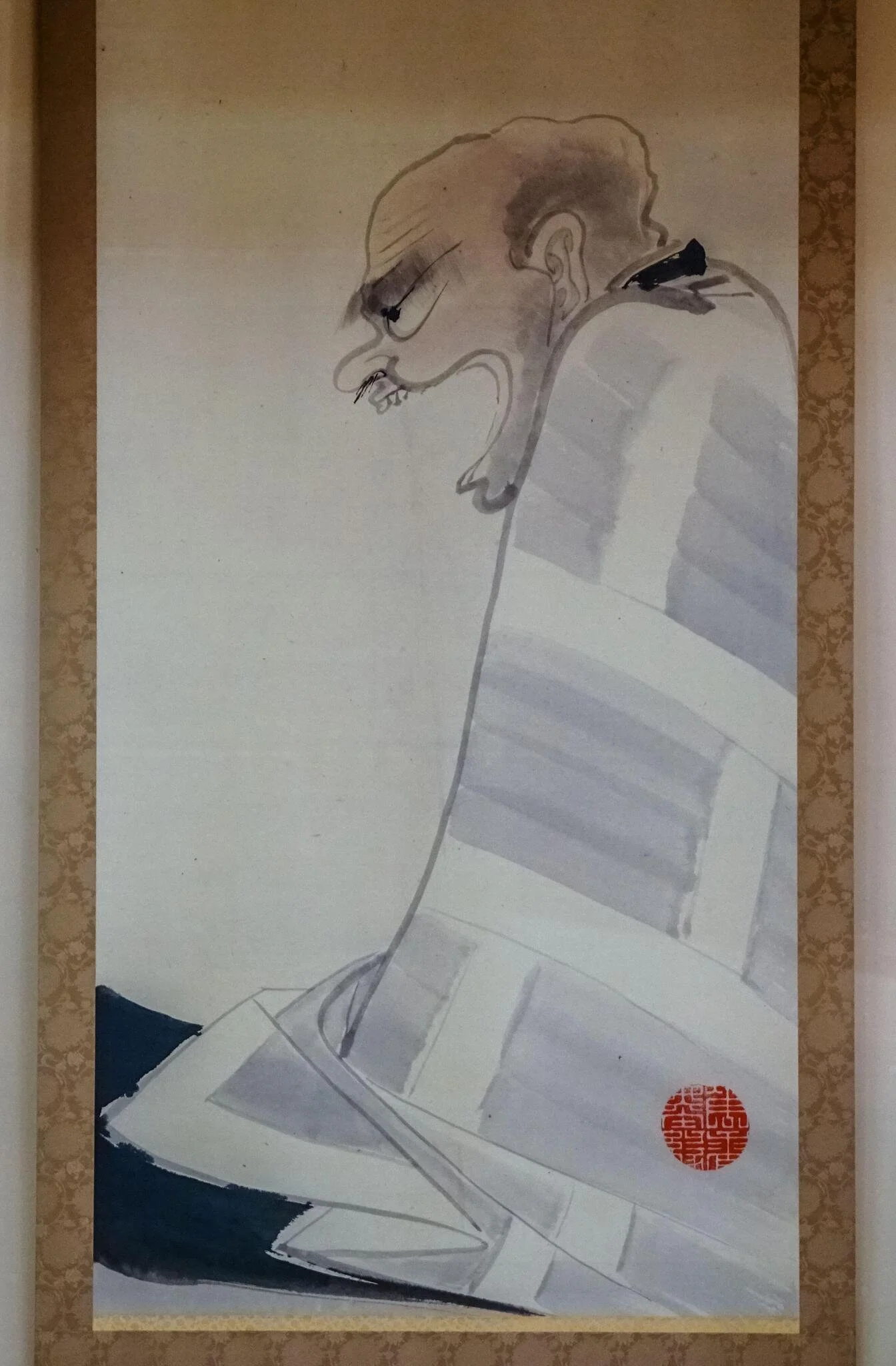
To say that Linji Yixuan (d. 866) was the founder of a sect of Chinese Chan Buddhism is not entirely accurate. It is true that Master Linji, known in Japanese as Rinzai, is the namesake of one of the Five Houses of Chan that flourished during the latter half of the Tang Dynasty (617–907). The other houses were Guiyang, Caodong, Fayan, and Yunmen. Of these, only the Linji and Caodong schools survive today through their Japanese forms, Rinzai and Soto respectively.
Linji was not so much the founder of a school as a monk devoted to a distinctive style of Chan practice. After his death, his heirs Xinghua Cunjiang (830–888) and Shensheng Huiran compiled his teachings into the Record of Linji (Linji Lu). Two generations later, Fengxue Yanzhao (896–973) formalized the text.
Linji’s sayings belong to a larger body of “recorded sayings” literature from the late Tang period, including the teachings of his teacher Huangbo Xiyun, Huangbo’s teacher Baizhang Huaihai, and perhaps the most influential text of the era, the Platform Sutra, attributed to Dajian Huineng, the Sixth Patriarch.
This cluster of Chan masters, Mazu Daoyi, Baizhang, Huangbo, and Linji, became famous for their use of shouts, blows, and startling responses as methods of awakening students. Often presented as encounter dialogues between teacher and student, these stories became the precursors of the koans later collected in famous Song Dynasty texts like the Blue Cliff Record and the Book of Serenity.
Linji's Style
Viewed through a modern lens, many of Linji’s encounter dialogues reveal a startling and often confrontational approach to awakening. Consider this passage from the Linji Lu (Shimano translation):
Ascending the high seat, the Master said, “From your lump of red flesh there is a True Person without Rank who is always going out and coming in through the face. If you have not yet testified on this, look! Look!”
Then a monk came forward and asked “What about the True Person without Rank?” The Master got down from his seat and grabbed him, and said, “Speak! Speak!” The monk was going to say something, whereupon the Master pushed him away and said, “The True Person without Rank? What a piece of shit!” Then the Master returned to his quarters.
To a modern reader, Linji can appear brusque, relying on confrontation, humiliation, and physical force as methods of instruction. He demands immediate spontaneity from his students and frequently resorts to physical actions that would be unacceptable in most contemporary practice settings. He offers little explanation, often ending an encounter abruptly and leaving students to wrestle with the experience themselves. These patterns appear throughout the Record of Linji. For centuries, students in the Linji lineage studied these original dialogues directly. A few more examples illustrate the flavor of the text:
The Master asked Lepu, “From olden times, one used the stick, another one shouted. Which one is more intimate?” Lepu said, “Neither.” The Master asked, “What is intimacy?” Lepu shouted. The Master hit him.
And
The Master asked a nun, “Well-come? Ill-come?” The nun shouted. The Master took his stick and said, “Say more! Say more!” The nun shouted again. The Master hit her.
I think you get the idea. Or perhaps I should shout while shoving you to the ground.
The Context Behind the Shouts and Blows
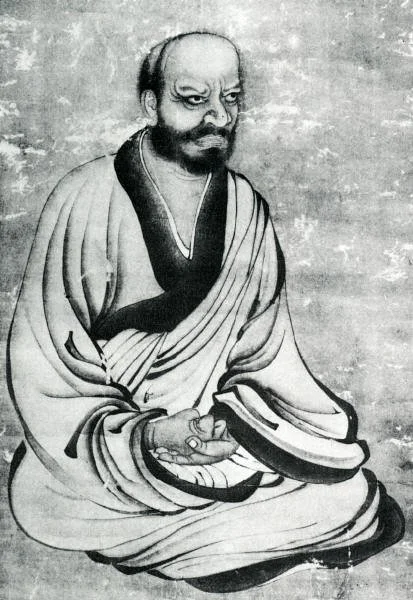
Linji learned this style from his teacher Huangbo Xiyun. In the famous transmission story, Huangbo strikes Linji three times before sending him to Dayo. When Dayo hears what happened, he replies: “Huangbo is indeed such a grandma.” Linji awakens and exclaims: “Aha! Huangbo’s Buddha-Dharma is nothing special!” When Dayo challenges him further, Linji responds with three blows to Dayo’s ribs. Returning to Huangbo, he similarly challenges his teacher. Huangbo famously shouts: “You lunatic, coming back here and pulling the tiger’s whiskers!”
Apparently, striking your teacher was considered a sign of understanding rather than disrespect. Such are the peculiar joys of Chan mythology. To understand why these encounters were preserved and celebrated, we need to look beyond the individual stories and examine the larger mythology that shaped Chan identity.
The Mythic Foundations of Chan
Many of the foundational stories of Chan function more as religious mythology than historical reportage. Three stories in particular stand at the center of Chan self-understanding.
The first is Mahākāśyapa’s Flower Sermon, in which Śākyamuni Buddha silently twirls a flower and Mahākāśyapa smiles in recognition. This story symbolizes direct transmission from teacher to student. It first appears in written form roughly fifteen centuries after the event it purports to describe.
The second is Bodhidharma’s encounter with Emperor Wu. Asked about the merit of supporting Buddhism, Bodhidharma famously replies, “No merit.” When asked who stands before him, he answers, “Not knowing.” This story first appears in written sources centuries after the encounter supposedly occurred.
The third is Huineng’s famous gātha, written during a contest to determine the successor of Hongren, the Fifth Patriarch. Contemporary scholars generally regard this account as literary construction rather than historical fact, serving to emphasize Huineng’s sudden approach over the Northern School’s gradual practice associated with Shenxiu.
Contemporary scholars tend to focus less on whether these stories are historically factual and more on how they shaped Chan identity and practice. Mahākāśyapa’s flower establishes direct transmission from the Buddha. Bodhidharma’s encounter with Emperor Wu demonstrates freedom from attachment to concepts and scriptures. Huineng’s gātha points directly to the nature of mind:
Bodhi originally has no tree,
The bright mirror also has no stand.
Fundamentally, not a single thing exists—
Where could dust alight?
These stories support the teaching traditionally attributed to Bodhidharma:
A special transmission outside the scriptures;
Not dependent upon words and letters;
Directly pointing to the human mind;
Seeing one's true nature and becoming Buddha.
Modern scholarship can only trace this verse to the twelfth century, nearly six centuries after Bodhidharma's lifetime. Yet its importance lies less in historical authorship than in how it came to express the heart of Chan practice.
What Does This Have to Do With Linji?
Linji’s shouts and blows can be understood as an embodied expression of this Chan vision. If Mahākāśyapa represents transmission, Bodhidharma freedom from conceptual thought, and Huineng direct insight into mind, then Linji represents the attempt to enact these principles in immediate human encounter. The point was not primarily the words. The point was the encounter itself. Whether or not these exchanges actually unfolded as recorded, they communicated something powerful to later generations. The wisdom of Chan was understood not merely as an idea but as a living reality manifested through action, spontaneity, and direct experience.
One could also argue that historical circumstances helped transform Linji’s approach into a distinct school of Chan. During Linji’s lifetime, Buddhism suffered periods of severe persecution. Temples were destroyed, texts burned, and monastic communities dispersed. The Northern School, associated with the gradual teachings of Daoxin and Hongren, was especially affected. Linji and Huangbo, living farther from the political centers of power, were less directly impacted by these suppressions.
Linji himself was no anti-intellectual iconoclast. He studied the Vinaya extensively and spent years serving both Huangbo and Dayo before undertaking pilgrimage and eventually settling at his own monastery. Deeply trained in the sudden style associated with Mazu, he emerged during a period when Chan Buddhism was gaining visibility and influence throughout China. In many ways, Linji became the embodiment of Chan energy and philosophy. The hope was that his actions and intentions, more than his words, would inspire future generations.
Linji's Legacy
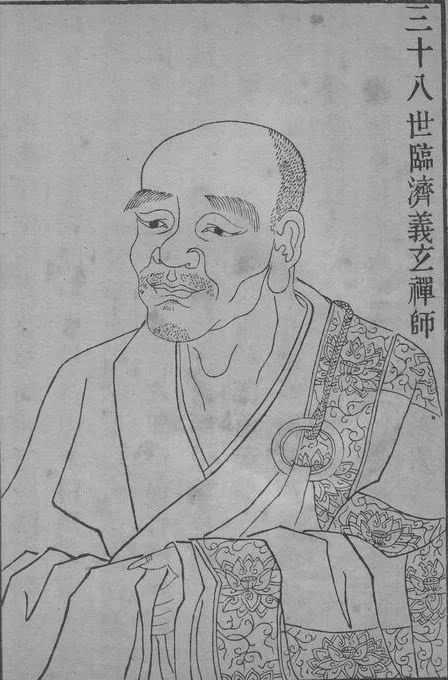
Chan Buddhism reached its peak influence during the Song Dynasty before gradually fading into the broader fabric of Chinese religious life. Linji’s teachings were transmitted to Japan by several monks, but they did not truly flourish until the seventeenth century, when the great reformer Hakuin Ekaku revitalized koan practice.
Several major koan collections contain dialogues attributed to Linji. Yet when one reads the Linji Lu itself, understanding rarely appears front and center. Instead, there is often confusion, misdirection, shouting, and the occasional blow. One is left wondering: is this really how Zen students should relate to their teachers? I hope Zen has evolved beyond the need for grunts and punches.
I believe contemporary American Zen has the opportunity to integrate the gradual cultivation emphasized by Shenxiu with the sudden intensity associated with Huineng and Linji. While there is great value in honoring our ancestors, we now live amid an extraordinary diversity of Dharma teachings and practice traditions. Our approach is increasingly cosmopolitan. We honor the ancestors not by repeating their methods unchanged, but by receiving their insights and adapting them to the conditions of our own time.
Linji’s reputation became so influential that his students eventually established a school bearing his name and approach. That lineage has continued, largely uninterrupted, into the present day.
A final story:
When the Master was about to pass away, he sat regally and said, “After my departure, don’t ever extinguish the treasury of my True Dharma Eye.” Sansheng came forward and said, “Who dares extinguish the Treasury of your True Dharma Eye?” The Master asked, “In the future, if someone asks you, what will you say to him?” Sansheng shouted. The Master said, “Who would ever have thought that the Treasury of my True Dharma Eye would be extinguished upon reaching such a blind donkey!” Having said these words, while sitting regally, the Master shed his body.
Even at the moment of death, Linji could not resist one final shout from beyond the grave. Whether we admire his style or recoil from it, his presence continues to challenge us more than a thousand years later. The fact that we are still arguing with him may be the clearest sign that his transmission remains alive.
References:
The Record of Linji, (Thomas Yuho Kirchner(Editor), Ruth Fuller Sasaki(Translator)) (2009), University of Hawaii Press, Honolulu, HI
The Book of Rinzai, - Translated by Eido Shinano, (2005) Zen Studies Society Press, NY, NY.
The Northern School and the Formation of Early Ch’an Buddhism, John McRae, University of Hawaii Press, Honolulu, HI
The Spirit of Zen, Sam Van Schaik, (2018), Yale University Press, New Haven, CT
Zen’s Chinese Heritage, Andy Ferguson, (2011), Wisdom Publications, Somerville, MA