Buddhist Matriarchs Pt.2 - Japan, 11th thru 19th Century
This second blog devoted to the matriarchs of Buddhism covers close to 1,000 years. Zen was taking shape in Japan during those years. The more traditional schools of Tendai and Shingon excluded women from practice. Ryonen, Shogaku and Egi found refuge in the newly forming Soto lineage of Dogen Zenji. When Dogen moved his center to build Eiheiji, these women were part of the journey. The following stories include many examples of women having to face great challenges to be recognized as part of the dharma. There is much to learn and much to honor in learning about these matriarchs. Part 1 of this series covers Buddhist Matriarchs of the 20th Century.
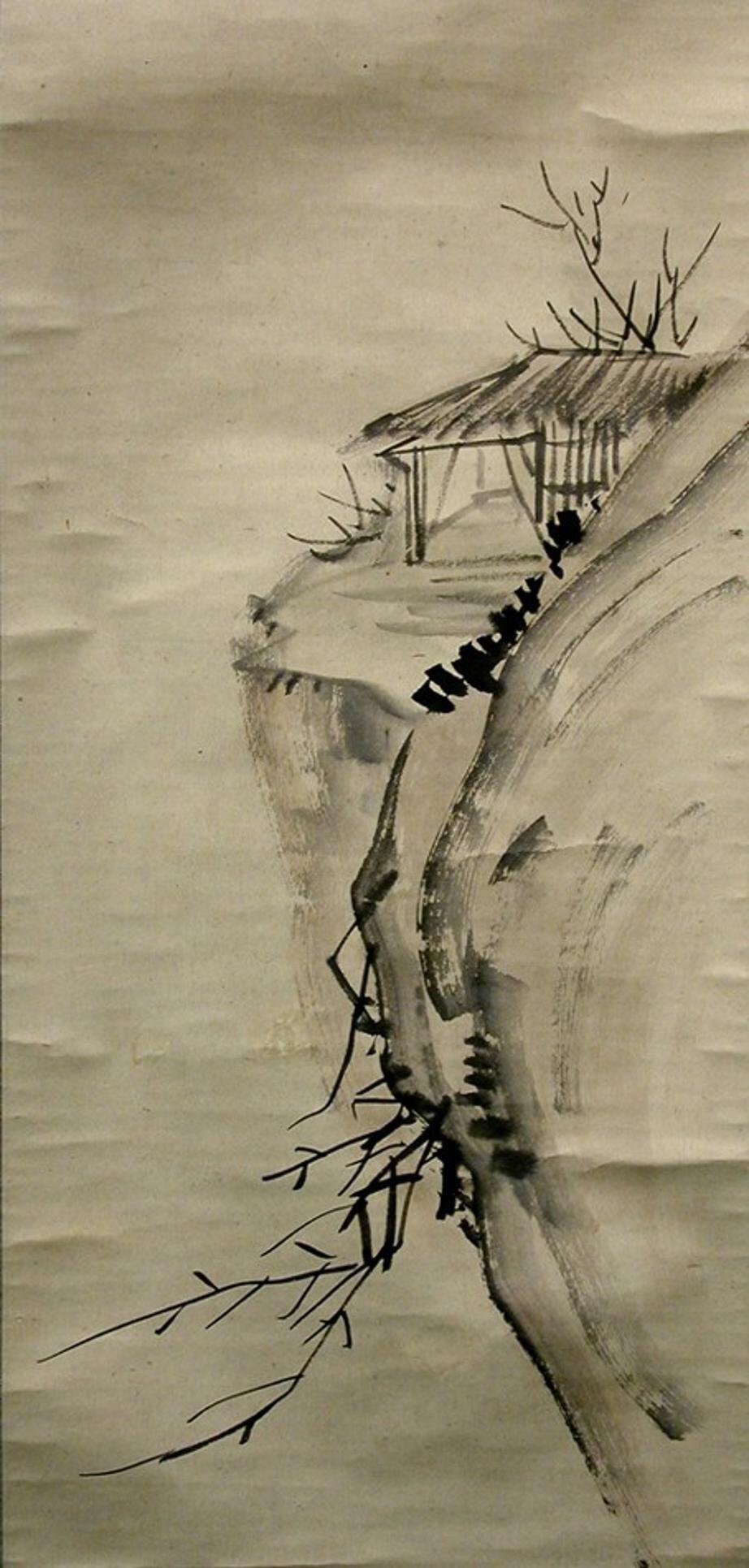
When The Nightingale Returns - Rengetsu
Rengetsu (1791 -1875)
Otagaki Rengetsu took vows as a Pure Land Buddhist nun at the age of 33 after the loss of two husbands and four children. She joined the Chion-in temple in Kyoto with her elderly father and took the name Rengetsu meaning “Lotus Moon.” After her father passed away nine years later, she was forced to leave the temple to make a living on her own, which she did by creating pottery inscribed with her poetry. She was trained in ceramics, poetry, calligraphy, martial arts and tea ceremony. Her poetry reflects a deep understanding of Zen.
Butterfly
Fluttering merrily and
Sleeping in the dew
In a field of flowers,
In whose dream
Is this butterfly?
Teijitsu (18th cent.)
After several centuries in which women were not allowed to practice in Soto monasteries, a nunnery called Hakuju-an was built near Eiheiji in the 1700s. Teijitsu was the second abbess there. She was of ordinary birth and was said to be a disciple of Menzan Zuiho. Sallie Tisdale, in her noble book, Women of the Way, writes eloquently about Teijitsu’s awakening. “And then she saw that arisings arose, abided, and fell away… she saw that knowing this arose, abided, and fell away. Then she knew there was nothing more than this, no ground, nothing to lean on stronger than the cane she held, nothing to lean upon at all, and no one leaning, and she opened the clenched fist in her mind and let go and fell into the midst of everything”
Ohashi (18th cent.)
Born Ritsu, into a samurai class, she choose to be sold into prostitution when her family fell into hardship, where she was given the name Ohashi. She met Hakuin, who offered her a koan “Who is it that does this work?”
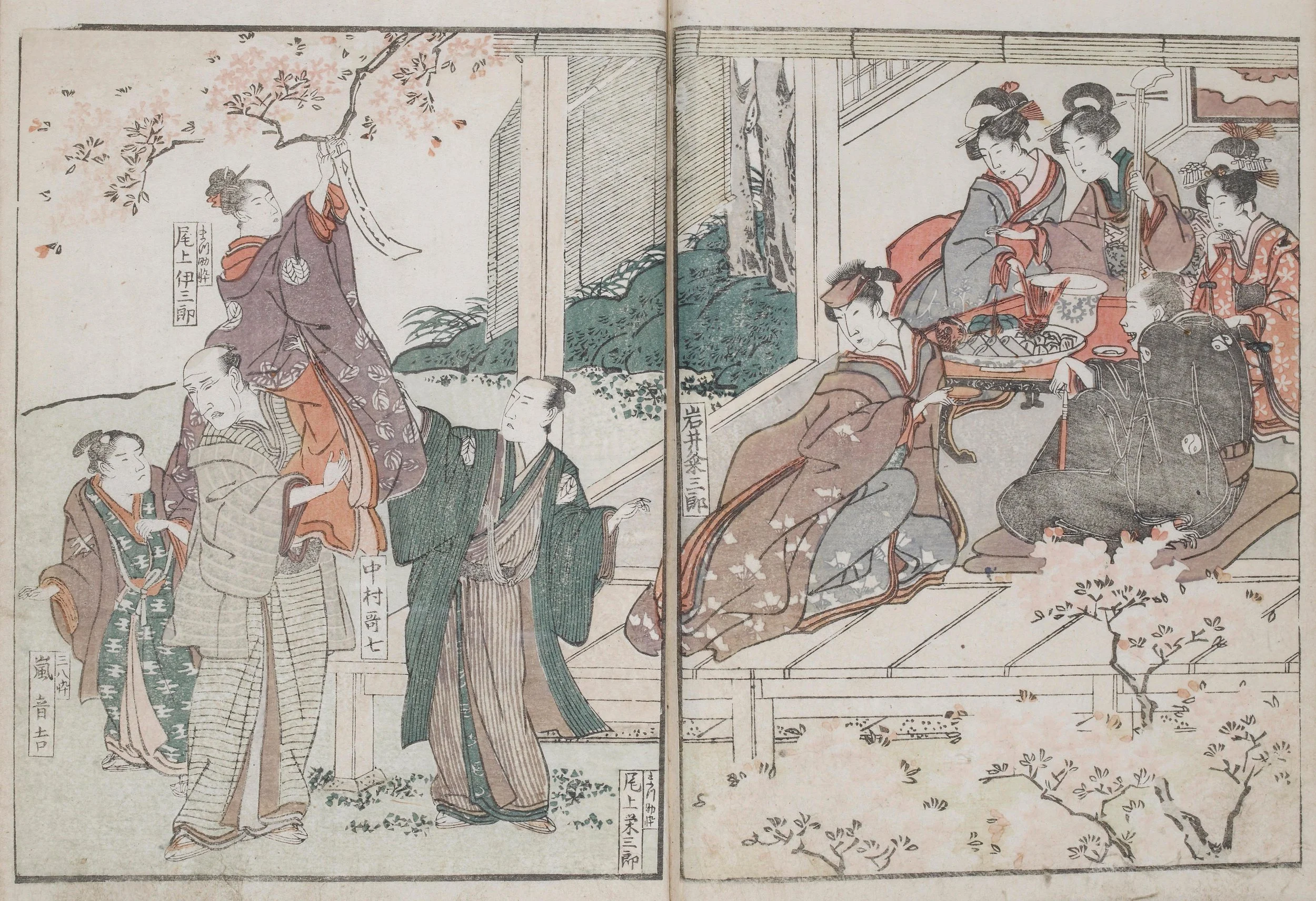
Courtesans - Edo Japan
After an experience of awakening in an encounter with a bolt of lightning, she was ransomed from the brothel by a patron, Isso. They were eventually married. With Isso’s permission, she became a nun.
Myotei (17th cent.)
Stories of the nun Myotei persist. She trained at the Rinzai monastery Engaku-ji in Kamakura, Japan. She notoriously passed the “Four Katsus of Rinzai koan.” She is said to have arrived in dokusan with Zen master Zimon completely naked.
Satsu (1714 – 1789)
Satsu is a well-known student of Hakuin. Her father and Hakuin were friends during their childhood. Stories of their interactions are well known. The most notable is a koan encounter in which Hakuin Zenji asks her how she understand a koan. Satsu replies, “Sorry, can you repeat the question?” Before Hakuin finishes, she has bowed to him, saying “Thank you for your effort,” then she leaves the room. Hakuin famously cries out, “I must be careful—I’ve been outwitted by a young rascal!” After receiving inka from Hakuin, he asks her, against her wishes, to marry and raise a family. She marries Watanabe Kenzeamon and lives out her Zen mastery within the context of ordinary live.
Ryonen Gensho (1646-1711)
Ryonen is a renown nun due to her impassioned act of great dedication. After being denied entry into two different monasteries due to her beauty, she burned her face with an iron. She was then accepted and ordained by Haku-o, a Rinzai teacher. She was the founder of a temple Renjo-in, becoming abbot. While few of her paintings and calligraphy remain, her poetry continues to be celebrated in Japan today.
In this living world
the body I give up and burn
would be wretched
if I thought of myself as
anything but firewood.
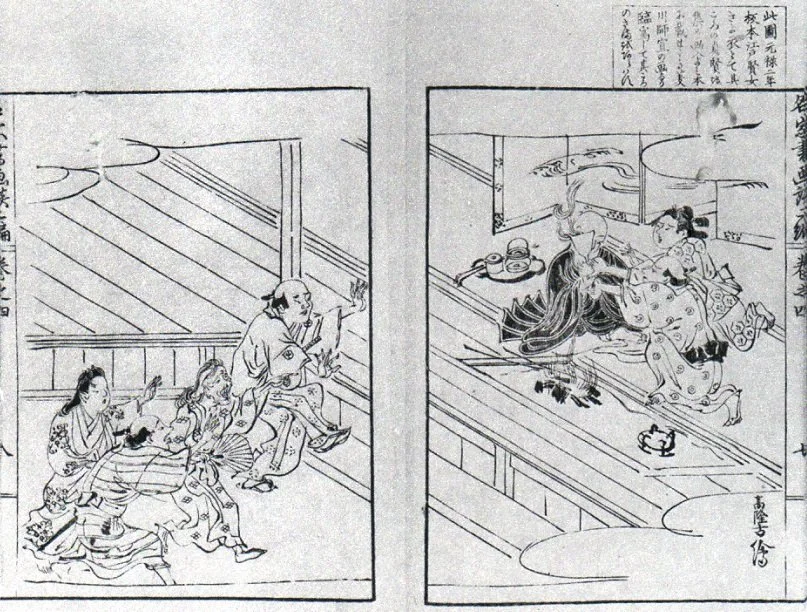
Ryonen Burning Her Face - Hishikawa Moronobu, 1618-1694
Bunchi Jo (1619-1697)
Given the posthumous title Daitsu Bunchi, she is recognized for renouncing her courtly life as the eldest daughter of the Emperor Gomizuno-o. She founded Ensho-ji Imperial Convent in Nara. Her precept platform for the ordination of nuns was the first since the 13th century. She is renowned for painting and poetry.
Soshin, Onaa Tsubone (1588-1675)
Born Onaa, she married at fifteen. After having three sons, she was cast out. Later divorced, she moved to a Rinzai subtemple at Myoshinji. She was invited to work in the ooku, the shogun’s harem, which she served an essential role. Ooku was a women’s only community forbidden to men except the shogun himself. She brought Zen to these women. When ordained she received the name Soshin, “Ancestor’s Mind.” The shogun Tokugawa Lemitsu built a temple for her called Saisho-ji, where she lived for the remainder of her life. She left two major works behind, including Soshin-ni Hogo.
Eshun (ca. 1364-?)
Eshun wanted to join her brother’s temple, as Ryoan Emyo (1337-1411) was the abbot of Sojiji. She was denied entry due to her brother’s belief that she would distract the monks with her beauty. Like Ryonen Gensho, she too scarred her face to join the order. She shaved her head and became a monk. There are several wonderful koan like stories in the literature.
Eshun volunteered to bring a message from her abbot to the abbot of Engakuji, a temple known for its rough treatment of outsiders.
“When the Engakuji monks saw her walk through the main gate, one of them rushed forward, raised his robes to expose himself, and said, “This monk’s thing is three feet long. How about it?”
Eshun calmly lifted her robes, spread her legs and said, “This nun’s thing is infinitely deep.” She dropped her robes and continued down the corridor, unaccosted.
Eshun’s Departure is also a familiar koan:
When Eshun, the Zen nun, was past sixty and about to leave this world, she asked some monks to pile up wood in the yard. Seating herself firmly in the center of the funeral pyre, she had it set afire around the edges.
"O nun!" shouted one monk, "is it hot in there?"
"For one who follows the way, there is neither hot nor cold," answered Eshun. The flames arose, and she passed away.
Shotaku (Seitaku) (14th century)
As the third Abbess of Tokeji temple in Kamakura, Nun Shotaku is celebrated for defending herself against an armed assailant. She fended off the aggressor by rolling up a piece of paper into a sword and stabbing the man in the eye. When he tried to run, her katsu shout sent him off on his way.
Soitsu (mid 14th cent.)
Soitsu was the only woman to receive dharma transmission from Gasan Joseki (1275-1365), a successor of renowned Zen master Keizan.
Myosho Enkan (early 14th cent.)
Keizan’s cousin, Myosho Enkan, meaning “Bright Whole Vision,” became abbess of Entsu-in. She later was the abbess of the convent Hooji.
Kinto Ekyu (14th century)
She was the first Japanese woman to receive Dharma transmission in the Soto tradition. She was a disciple of Keizan.
Mokufu Sonin (14th cent.)
Another disciple of Keizan and the daughter of Shozen, she was ordained in 1319. She and her husband donated land and money, which allowed Keizan to establish the monastery Yoko-ji in 1322. Keizan named her the first abbot of Entsu-in, an important convent.
Shozen (early 14th cent.)
Sonin’s mother, Shozen remained a householder. Her family wealth helped establish Yoko-ji. Keizan said the sangha would honor her forever in an annual ceremony.
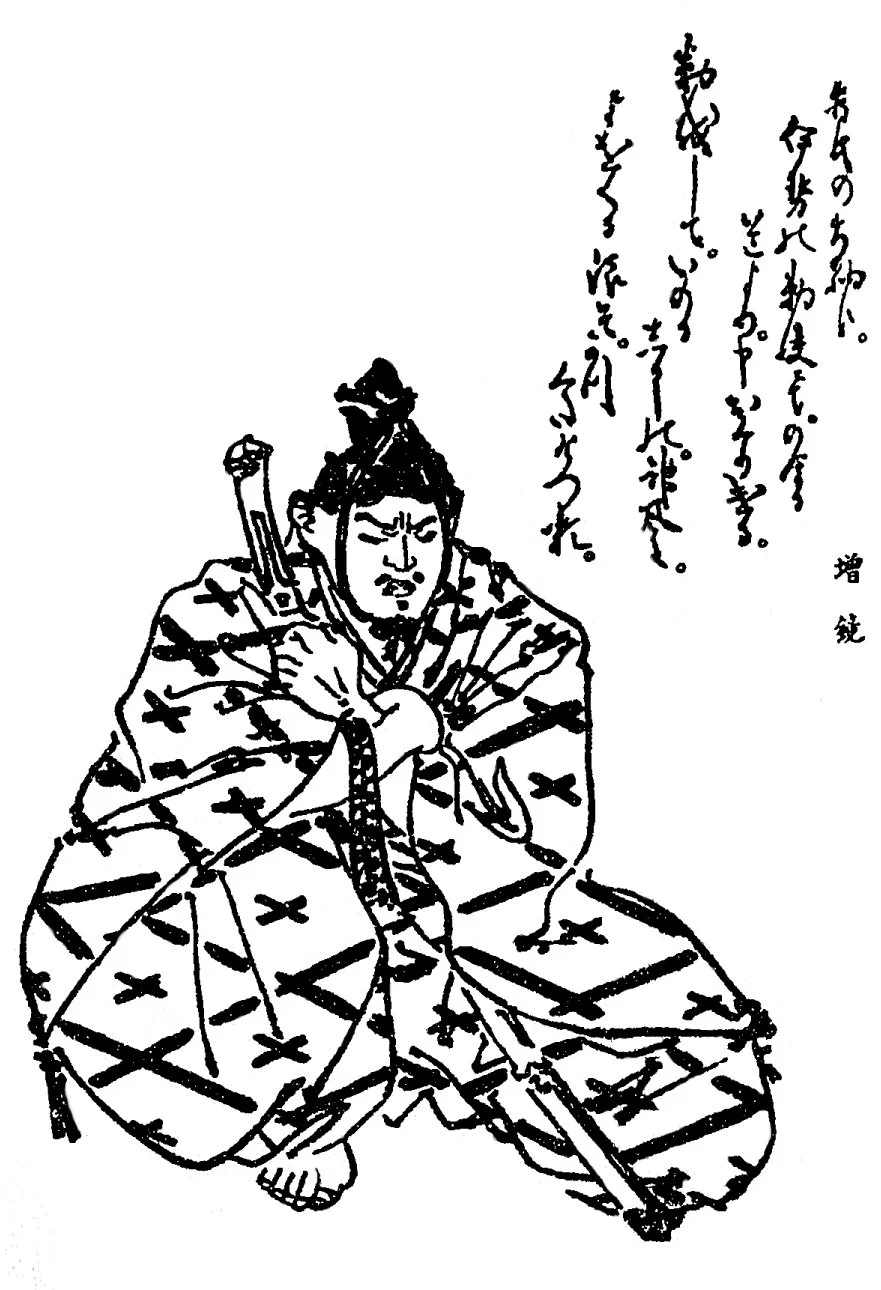
Kakusan Shido By 菊池容斎 - 『前賢故実
Shido (1252 -1306)
Kakusan Shido was a fully authorized Rinzai priest who founded the convent Tokeiji in Kamakura in 1285 as a refuge for abused or dismissed wives, which it remained. Mugaku Sogen wrote this poem in her honor when he accepted her vows:
For countless aeons all has been a dream,
And none can tell the length of the road ahead.
Love and gratitude are severed by one sword stroke,
The sun burns, and fragrant are the myriad trees.
Several koan dialogues with Shido remain. When challenged by a Rinzai monk at her inka ceremony who asked, “In our lineage, anyone receiving transmission must expound on the Discourse of Master Linji. Do you know the work?” Shido placed her knife before her and replied, “As a woman from a military family, however, I place my dagger before me. What need have I for books?”
En’i
Little is known about En’i. She too donated land to Eikoji for Keizan’s building plan.
Ekan (d. ca. 1314)
She was the mother of Keizan. She became the abbess of the Soto convent Jojuji and later Hooji temple. Ekan was an ardent devotee of Kannon, which helped promote this bodhisattva throughout Soto Zen. Keizan made a formal vow to include women in the sangha.
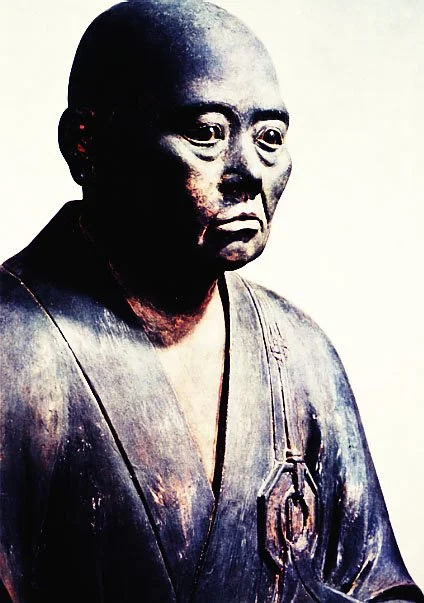
Rare 13th Century statue of Mugai Nyodai
Mugai Nyodai (1223-1298)
She was heir to Mugaku Sogen, the founder of Engakuji. After receiving transmission, she established the temple Keiaiji Convent, head temple of the Five Mountain Rinzai Zen Convent Association. She is considered the first female Zenmaster in Japan. Nyodai’s enlightenment story is well remembered. She was carrying a bucket of water when the bottom broke; at that moment she awakened.
So many ways I have fixed the bucket,
It’s braces weak and soon to break -
until one day the bottom fell out.
Then there was no water in the bucket,
No moon shining in the water.
Senshin (late 13th cent.)
A disciple of Kangan Gi’in (1217-1300), who was a disciple of Koun Ejo, the founder of a Soto lineage in Kyushu.
Joa (late 13th cent.)
She was a disciple and heir of Kangan Giin. Joa’s practice included copying the Lotus Sutra.
Egi (early 13th cent.)
She was ordained as a Daruma-shu, Chan lineage, nun, then became a disciple of Dogen, following him to Eiheiji. She attended to Dogen in his final days. She was named dharma sister to Koun Ejo in the transition following Dogen’s death. There is indication that she helped to record the Shobogenzo Zuimonki.
Eshin
Eshin was another disciple of Dogen. Dogen gave a lecture as a memorial to her father in 1246, saying “Once you understand one principle, you understand all principles.”
Ryonen (early 13th cent.)
Ryonen initially trained with the Daruma school, as there were few options for women in the traditional Buddhist societies of the day. She became a disciple of Dogen when she was 60. He wrote:
“You, Ryonen, the follower of this path, possess the seed of wisdom, and have early on embraced the demanding practice of the Buddhas. Though a woman, you are endowed with the mettle of a man of great caliber. You do not recoil from the arduous practice of cultivating the path. Thus, I composed this sermon for you on the subject of ‘Bodhidharma’s intention of coming from the West.’” (Eihei koroku)
Shogaku
Shogaku Zenni was an aristocrat who donated money to Dogen to build the lecture hall at Kosho-ji. She is recognized as one of the earliest nuns taking vows, alongside Ryonen and Egi.
References
Women in Zen, https://www.womeninzen.org/
The Hidden Lamp, Florence Caplow and Susan Moon
Women of the Way, Sallie Tisdale