Understanding Our Lineage 5 - The Chinese Patriarchs
In the fifth of our series tracing the origins of Hollow Bones Rinzai Zen, we turn to the beginnings of Chan in 6th-century China. Having explored the Japanese lineage across four previous posts—including two devoted to Hakuin Ekaku—we now look further back to how Mahayana teachings entered China through the First Patriarch, Bodhidharma.
Traditionally, only the first six figures—Bodhidharma, Huike, Sengcan, Daoxin, Hongren, and Huineng—are recognized as patriarchs. However, given the central importance of Linji Yixuan to our lineage, I will also include key stories from his direct ancestors: Nanyue, Mazu, Baizhang, and Huangbo, Linji’s teacher. Linji himself will be taken up in a separate post.
Bodhidharma (c. 480–520)
Born a prince in India, Bodhidharma studied under Prajnatara, the 27th patriarch in the Indian lineage of Gautama Buddha. He later traveled to China, a journey said to have taken three years.
One of the most famous accounts of his teaching is his meeting with Emperor Wu of the Liang Dynasty. The emperor, a devoted patron of Buddhism, asked:
“What is the highest meaning of the holy truths?”
Bodhidharma replied, “Emptiness, no holiness.”
“Who stands before me?”
“No knowing.”
This exchange, preserved in the Blue Cliff Record, reflects a defining shift: Chan’s movement away from doctrinal Buddhism toward direct realization.
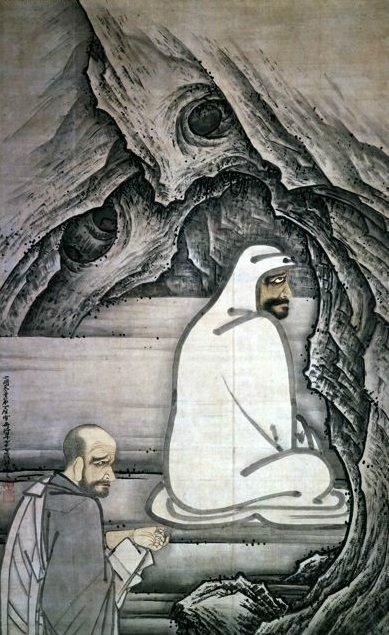
Huike and Bodhidharma
Bodhidharma is also associated with nine years of wall-gazing meditation at Shaolin Monastery. Though few texts are reliably attributed to him, the Outline of Practice presents four key approaches: accepting injustice, adapting to conditions, seeking nothing, and practicing the Dharma.
His teaching is often summarized in the well-known verses:
A special transmission outside the scriptures
No dependence on words and letters
Direct pointing to the human mind
Seeing one’s nature and becoming Buddha
Huike (487–593)
The Second Patriarch, Dazu Huike, is remembered for his fierce determination. In a famous story from the Mumonkan, he stands in the snow outside Bodhidharma’s cave and cuts off his arm to demonstrate sincerity.
When he asks for his mind to be pacified, Bodhidharma replies:
“Bring me your mind, and I will pacify it.”
“I cannot find it,” Huike responds.
“Then it is already pacified.”
Sengcan (529–613)
Little is known about the Third Patriarch, Jianzhi Sengcan, except for his association with Huike and his authorship of the classic poem Faith in Mind:
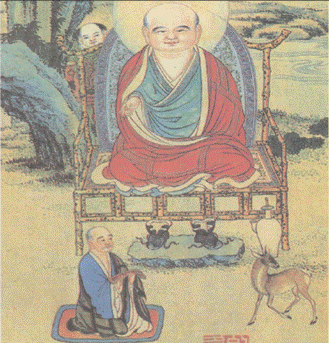
The Great Way is not difficult
Just avoid picking and choosing.
If you have neither aversion nor desire,
You’ll thoroughly understand.
A hair’s breadth difference
Is the gap between heaven and earth.
If you want to come forth,
Let there be no positive and negative.
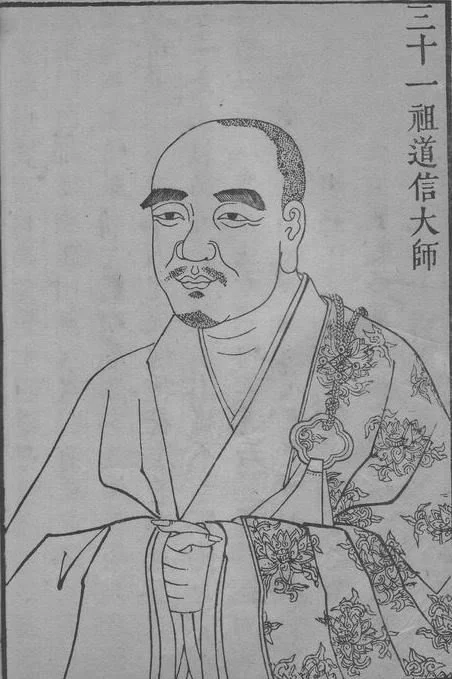
Daoxin (580–651)
Dayi Daoxin established one of the first Chan monastic communities. His contributions include integrating meditation with the Bodhisattva vows and incorporating scriptural traditions like the Lankavatara and Prajnaparamita teachings.
He emphasized that many names—Buddha-nature, nirvana, prajna—refer to a single, ungraspable reality.
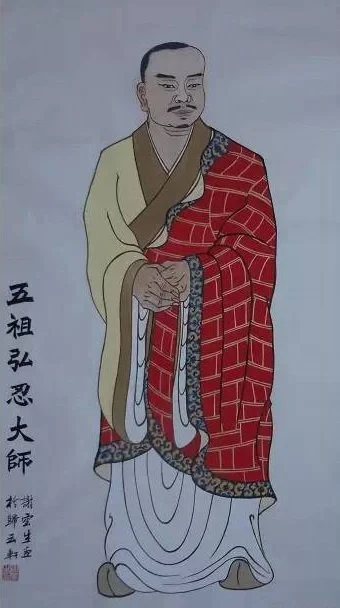
Hongren (601–674)
The Fifth Patriarch, Daman Hongren, is closely associated with the East Mountain School. He taught that deep practice requires distance from worldly distraction, comparing practitioners to trees growing strong in remote valleys before serving as pillars.
His legacy includes transmitting the Dharma to both Huineng and Shenxiu, leading to the later distinction between “sudden” and “gradual” approaches.
Huineng (638–713)
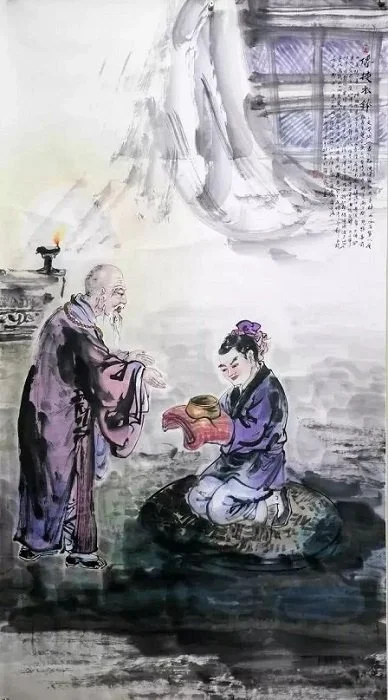
The Sixth Patriarch, Huineng, is one of the most influential figures in Chan. His teachings are preserved in the Platform Sutra.
In a famous contest, Shenxiu wrote:
The body is the Bodhi tree
The mind a bright mirror stand
Polish it diligently
Let no dust alight
Huineng responded:
Bodhi has no tree
Nor is there a mirror stand
Originally not a single thing exists
Where could dust alight?
Recognizing his insight, Hongren secretly transmitted the Dharma to Huineng.
Huineng’s teaching emphasizes sudden awakening and direct realization. In another famous exchange about a flag moving in the wind, he resolves the debate: “It is not the wind or the flag moving—it is your mind.”
Nanyue Huairang (677–744)
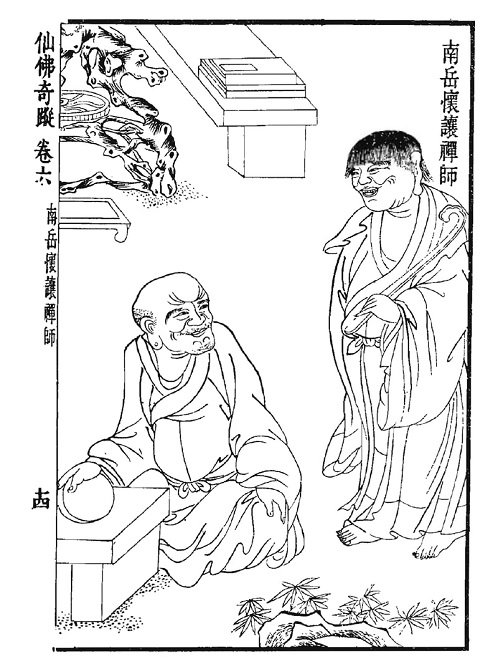
A disciple of Huineng, Nanyue Huairang is known for challenging attachment to meditation itself. In a famous story, Nanyue questions Mazu about his commitment to meditation. He says, “What does Your Worthiness intend to do by sitting in meditation?” Nanyue then takes a brick to the door of the hut and rubs. Mazu pays little attention. After a long while, Mazu asks, “What are you doing?” Nanyue replies, “I am rubbing a brick to make a mirror.” Mazu says, “How can you make a mirror by rubbing a brick?” The master says, “If a mirror cannot be made by rubbing a brick, how can one become a Buddha by sitting in meditation?” Mazu asks the master, “What should one do then?” The master says, “If a cart drawn by an ox does not move, is it correct to whip the ox or the cart? Do you want to sit in meditation or to be a sitting Buddha? If you want to sit in meditation, meditation is neither sitting nor lying. If you want to be a sitting Buddha, Buddha is not motionlessness; moreover, motion should be neither accepted nor rejected. If you sit (to become a) Buddha, you will simply kill him. If you cling to sitting you will never realize the Dharma.”
His teaching cuts through fixation on form and points to the living essence of practice.
Mazu Daoyi (709–788)
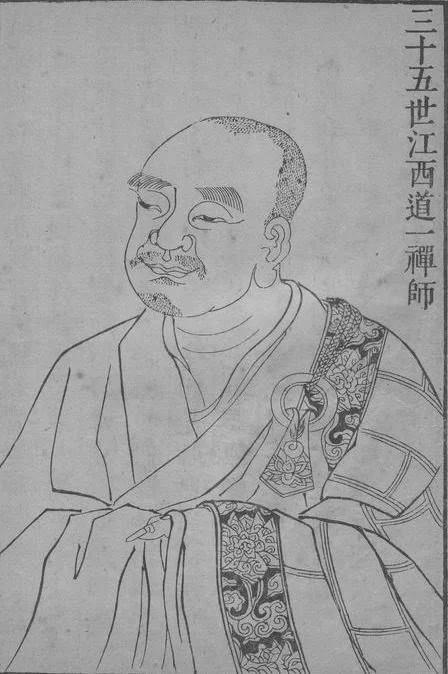
Mazu Daoyi is a pivotal figure in the development of Chan’s dynamic teaching style. Known for unconventional methods—including shouting and striking—he embodied the immediacy of awakening. He is the first Chan teacher to be acknowledged as using the keisaku, or encouragement stick, to wake up students during practice.
When asked about the essence of Buddhism, he replied, “What is the meaning of this moment?”
Baizhang Huaihai (720–814)
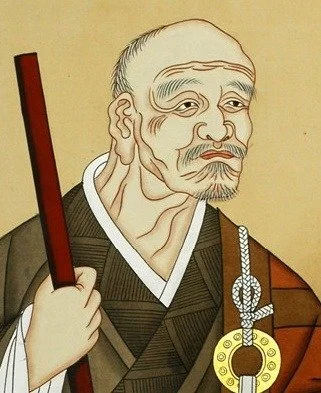
A disciple of Mazu, Baizhang Huaihai established monastic rules still influential today. His famous dictum is “A day without work is a day without eating.” The second koan of the Mumonkan, known as Baizhang’s Fox, is another essential story of Chan. The story is too long repeat here. Key elements of the story are the old man, who reports to Baizhang that in a former life as a monk, he had incorrectly responded to an inquiry of the teacher. Because of this response, the monk was reborn as a fox for five hundred years. The old man now asks Baizhang to offer a turning word to release him from this karmic debt. Baizhang is asked by the old man, “Does a great adept fall into cause and effect or not?” Baizhang says, “A great adept is not blind to cause and effect.” This response releases the old man from this karmic debt. This teaching reinforces a middle way approach in Chan teachings, in which ethical living cannot be ignored.
Huangbo Xiyun (d. 850)
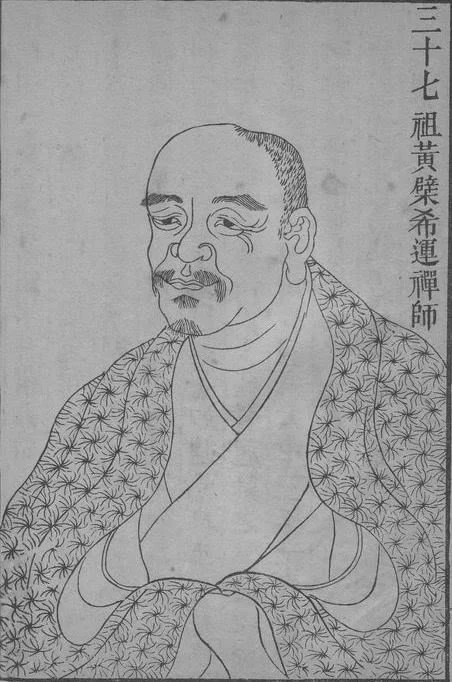
Huangbo Xiyun, teacher of Linji, emphasized the unity of mind and Buddha. His teachings often dismantle spiritual ambition and supernatural display. He was said to have been seven feet tall with a large protruding forehead which was called a “large pearl.” Huangbo left a small body of writing. A wonderful legend offers a nice picture of Huangbo’s teachings. On a journey to Mt. Tiantai he meets a monk. Coming to a stream, the monk tries to encourage Huangbo to cross. Huangbo says, “If Elder Brother wants to go across, then go ahead.” The monk walks across the top of the water, just as though it was dry land. The monk again encourages Huangbo to cross. Huangbo yells, “Ah! You self-serving fellow! If I had known this before, I would have chopped off your legs!” The monk cries out, “You’re truly a vessel for the Mahayana, I can’t compete with you.” He then vanished. (Zen Chinese Heritage, Ferguson, 2010).
Huangbo’s transmission to Linji Yixuan is a well-known story as well, in which Linji is struck three times by Huangbo in dokusan. Linji leaves to go to study with Gao’an Dayu. In the Dayu exchange, when Dayu insults Linji, Linji returns the blow with insight. Upon returning to Huangbo, he reports the events that occurred with Dayu. As Huangbo responds, Linji strikes him as well. These are the essential details of this early transmission!
Looking Ahead: Linji
Linji Yixuan, founder of the Linji school (Rinzai in Japan), stands as one of the most influential figures in Zen history. His teachings—direct, forceful, and uncompromising—will be explored in the next post.
Closing Reflection
Across these generations, a consistent thread emerges: a transmission beyond words, rooted in direct experience. From Bodhidharma’s stark negations to Huineng’s sudden awakening and Mazu’s immediacy, Chan continually returns us to what is present, alive, and ungraspable.
References
Record of the Lankavatara Masters, translated by John McRae
Two Zen Classics, Katsuki Sekida, 1996
Zen Chinese Heritage, Andy Ferguson, 2011
Images from https://terebess.hu