When We Sing Together, It's Transcendent.
Shen Yi - Nich Von
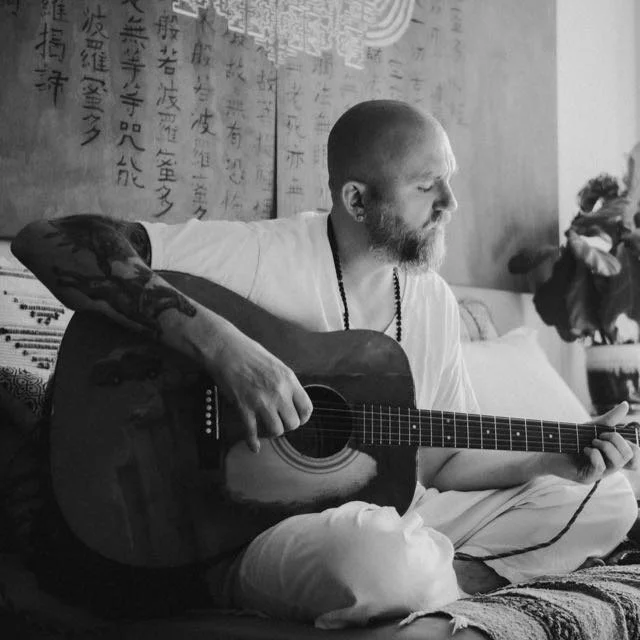
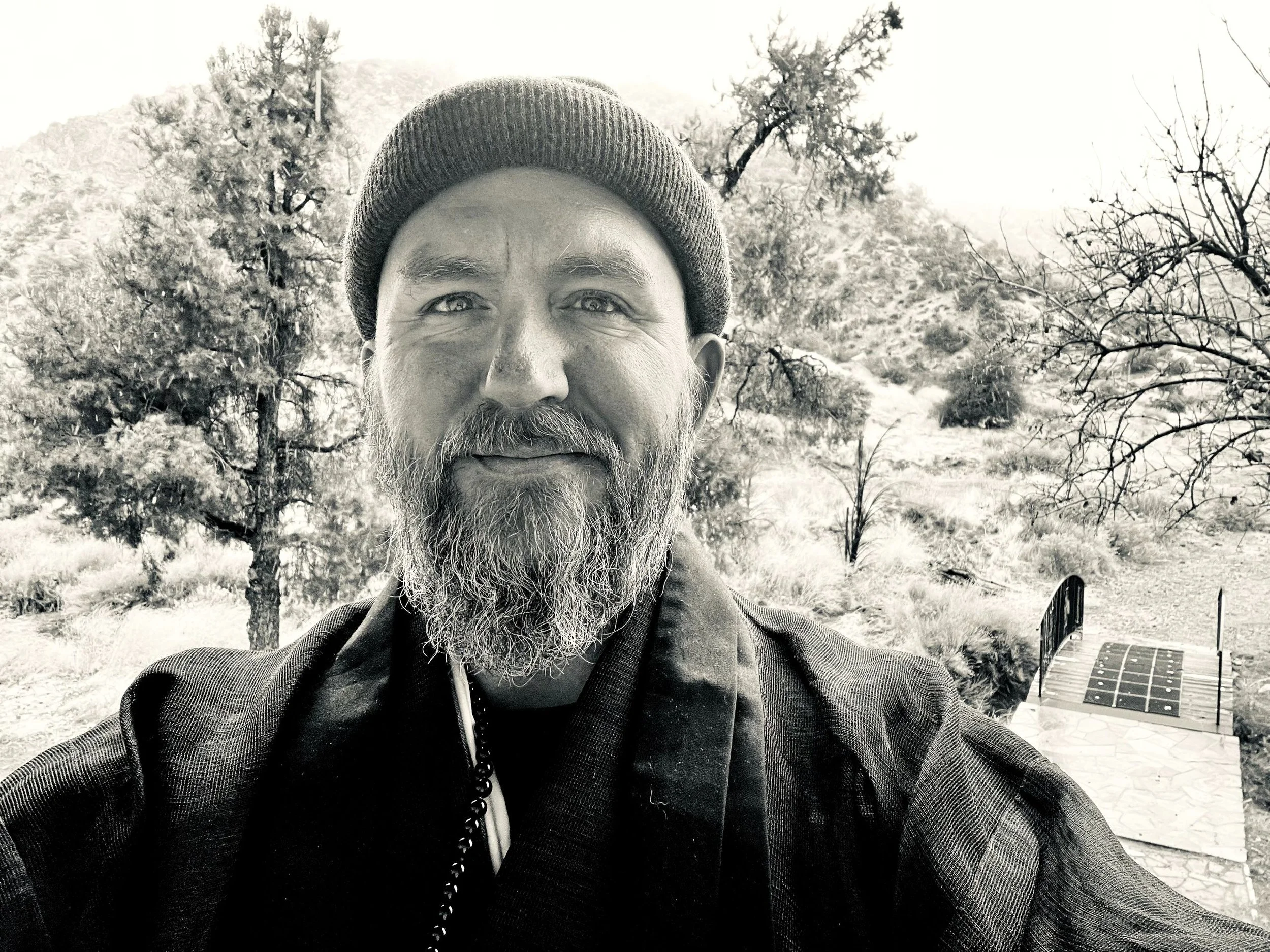
I first met Shen Yi Nick Von on sesshin with Jun Po Roshi at Black Mountain Retreat Center in Northern California. He would soon join our training program becoming an excellent Mondo Zen Facilitator. He continued his studies at Hollow Bones Zen, becoming ordained as a priest in 2023 at Dai Bosatsu. I’ve appreciated his approach, which brings together traditional ceremony with Zen practice. As a musician, he continues to bring us accessible teachings with his voice and guitar. He keeps a low profile as the leader of his sangha, Camino de Rose, in Tahachipi, CA. I am grateful to have caught up with Shen Yi, and his sacred music continues to bring clarity and joy in my life. To learn more about Shen Yi, visit https://www.nichvon.com/
Ekai: I am here with Shen Yi Nich Von, an ordained priest in the Hollow Bones Zen tradition. Welcome Shen Yi, tell me a little bit about your meditation practice. How you got into this?
Shen Yi: I've had a formal practice for about 18 years. Kind of coincided with finding out I was going to be a father. I wanted to start getting my stuff together. I'd always had a deep interest in Buddhism, since about 10. I was in a parking lot at a gas station, and I was thinking about all of these deities, the fantastic blue guys playing the flutes and things, and the skinny dead guy on a cross. And then I saw this fat happy guy. I was just always really attracted to the idea of this fat happy Buddha. Later I find out that this is Hotai, so I decided at a very young age that I was going to be a Buddhist.
Ekai: And so how did you find your way to Buddhism?
Shen Yi: I dabbled a lot, as we do. Most of my formative years were fueled by punk rock and psychedelics so I didn't have any kind of dedicated practice. My first kind of foray into formal meditation was actually through Transcendental Meditation. I had my first taste of absorption using that practice. It was like wow, this is actually doing something. That was enough to hook me in a little bit deeper into the practice.
Ekai: We met at a Hollow Bones retreat with Jun Po Roshi. Where had you been on other retreats?
Shen Yi: I had a handful of Vipassana style retreats, 10 days and 21 days. I had a very well established practice. I came to Hollow Bones after the passing of a teacher who grounded me in his style of meditation practice, which was Vipassana based.
Ekai: The way that Jun Po taught resonated with you?
Shen Yi: I found what I was looking for at that time. I'd been studying koans. I was reading the Blue Cliff Record and the Gateless Gate. I was mostly confounded and confused and not really penetrating very deeply into any of the koans. I had started looking for koan instruction when I came across the Mondo Manual online. It resonated very deeply with me. It was like somebody speaking directly to my experience, speaking directly to the things that I was looking to clear out through the practice of koans. For probably a year and a half, I was just Mondoing myself.
Ekai: Mondoing?
Shen Yi: Reading the manual with friends. Then I got curious, and I reached out to the organization and did my initial Mondo training with Engo, which coincided with the first cohort of Mondo Facilitation training you created. I was coming into the beginning of the reshaping of Mondo Zen Facilitation.
Ekai: Your timing was right because you definitely got to sit with Jun Po Roshi before he passed away. You were the early generation of certified Mondo folks. Hollow Bones isn’t hosting that program anymore, but you were part of that early generation. Are you using it these days?
Shen Yi: I've done it in a variety of settings. I do a lot of one-on-one instruction, which I find really valuable, just because of the intimacy that's there. I've done several group structured facilitations, which has also been really wonderful, because we go at a much slower place. When I do it with a group, we often do it over a period of 30 days. It would just be one koan a day for two and a half weeks. Then we start moving into the training mirrors, and then we start moving into the construction of the emotional koans and things. So it’s a much slower process but can be equally deep.
Ekai: Jun Po Roshi loved to do it in groups. You have put it in a sacred setting called a dieta. Tell me about that.
Shen Yi: Dieta suave is the technical practice. It’s a traditional plant diet. They're teaching plants that are considered master plants. Everything we bring into our body has an effect on our psychology. With psychoactive plants, like marijuana, for instance, it’s easy to identify the psychoactive influence of that plant, right? And we understand that these plants have an attitude and an essence. With other plants, the energy is much subtler. We diet in a variety of ways. It's not just food. We're also dieting our eyes, our ears, our speech, our conduct. It’s a really in-depth practice. It takes place over about 40 days, with the goal of putting our body into a sattvic state through a variety of practices including meditation, embodiment practices, and controlling our diet by removing all of the pungent foods. So it's very similar to what the Buddha said. Garlic, onions, leeks and all of these pungent, strong flavors make it difficult for our nervous system and our emotional body to relax so that we can meditate more deeply. Then within this container, we begin to study the koans together. It becomes a really in-depth practice for people. I get a lot out of it.
Ekai: It sounds lovely. I think Jun Po would really appreciate the practice. You're saying that lots of substances have impact on our consciousness, on our awareness. A dieta allows us to work with different powerful plants.
Shen Yi: It’s more transformational than a single psychedelic or plant medicine journey, yeah, because you're living it every day for a continued period of time. For four plus weeks you're engaged in embodiment and inquiry practices. It really becomes quite transformational for people.
Ekai: Many people were attracted to Jun Po Roshi because of his history with psychedelics. So it tends to attract folks who have some experience with them. What you're doing is a traditional practice. It's something that people have been doing for a long time.
Shen Yi: Yes, thousands of years. Every culture understands the medicinal properties of plants. When you ask traditional healers how they come upon this knowledge, they say that the plants told them. I've encountered people who had access to this level of interaction with the natural world. It's astonishing to remember that we can communicate directly with nature, not only with the plants. I believe that a big part of the dieta is our dream time. The plants will work with us during our dreams. One school of thought is that dreams are a direct communication with nature. Through this practice, we're learning to reawaken our capacity to communicate directly with nature, for healing, insights and growth.
Ekai: It sounds lovely and very unique. What you're describing is expanding the direction of these koans to include a broader, deeper psychological relatedness.
Shen Yi: I feel like it's all one taste, right? Bodhisattvas can manifest as a plant if they want. I feel that all these master plants and healing plants that we work with are great bodhisattvas manifesting as plants so that we can then have a more direct relationship.
Ekai: I appreciate that. So you arrived in Hollow Bones, you went through the certification, and then you ended up becoming ordained as a priest.
Shen Yi: Yeah, I feel like when you're so stubborn, you have to do things like become a priest, right? I feel like becoming a priest is just a symbol of my stubbornness. I have to go all in, otherwise I'll find a loophole, and I'll jump out. I'm not always good at being a follower or a joiner.
Ekai: How has anything changed since that was formalized?
“I would say there’s three pillars to the community, and they’re meditation, medicine and music. .”
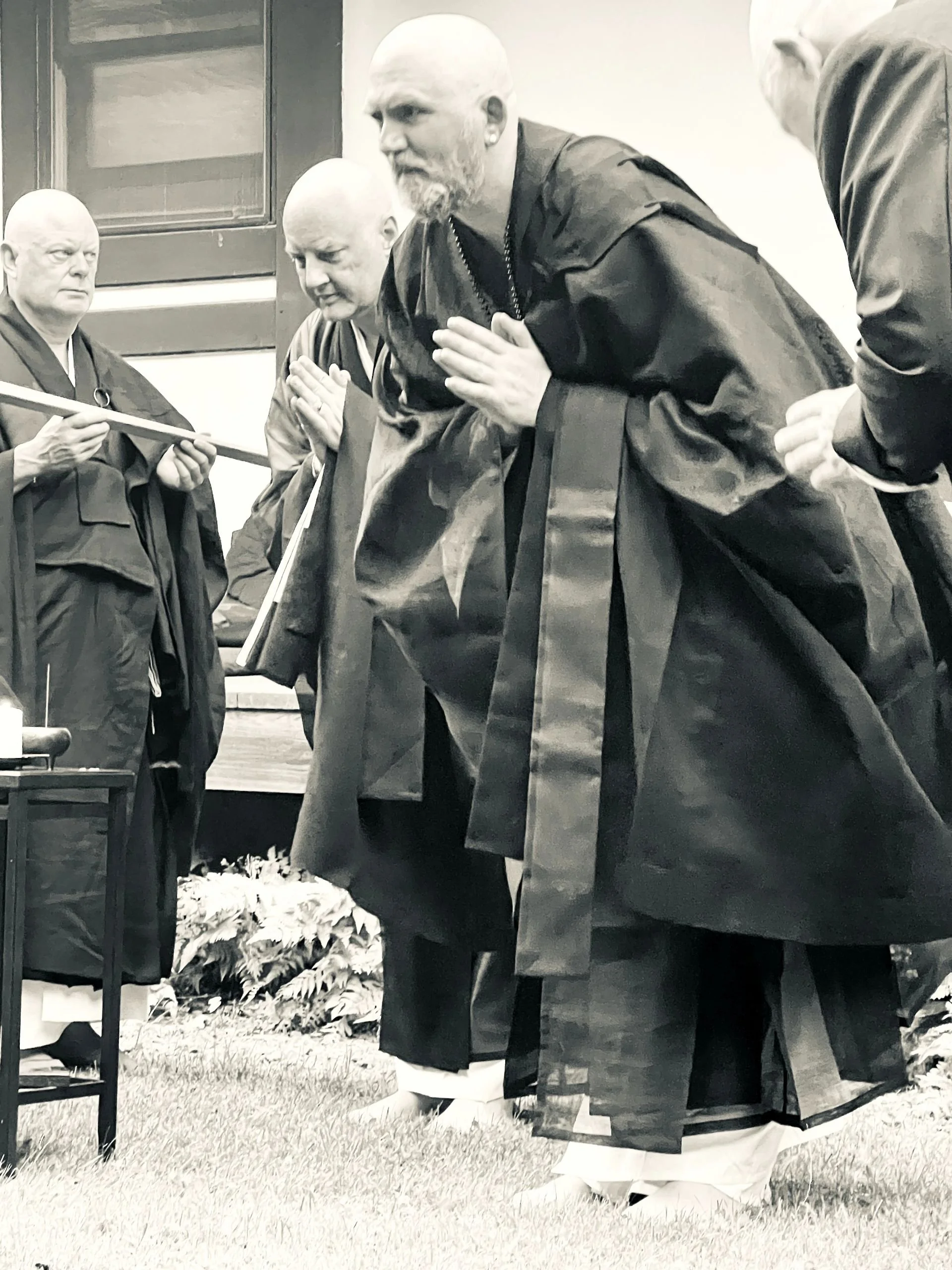
Shen Yi: One of the main things that changed for me was this deeper realization of the interdependency between my role and the community I serve.The community put together a fundraiser for me to help pay for the robes and the trip. They helped get my family out there so that they could be a part of the ceremony. And that was deeply humbling.As far as I'm concerned, the robes belong to them, and I'm just the guy that gets to wear them for a bit. For me, it was something that Junpo said that really stuck with me. It was “don't fall in love, stand in love.” Taking the robes was like an act of standing in love, and it was a way ofinspiring myself and others to stop running around digging a bunch of shallow holes trying to find water.
Ekai: What's unique about what you're describing is that you went through that process already with a sangha. I imagine your sangha is really proud of you.
Shen Yi: They were really, they celebrated me in a really beautiful way. They put on a little private concert and made food. It was a big celebration. It was just so rich. I felt really loved that day.
Ekai: Nice. Camino de Rose is the name of your Sangha.
Shen Yi: Yes, Alfonso de Rose was a wild man. Camino de Rose is the path of him. He lived in a monastery in Burma for some time and was getting ready to be ordained as a monk. And then circumstances aligned where he found himself beginning to work with in other mediums, like with plant medicine. My studies with him are what led me into that path. After his unexpected passing in 2016, I was the heir to the community. He had already told us many times that he was going to be leaving and going to do some other things, but he had had many conversations with his family, and with other leaders in the community at that time, that I was going to be the guy. I've now been leading longer than he ever did, which is kind of a wild transition, but I’m grateful to that. For a while there was a lot of novelty as everybody was getting used to it. But now it's been a long time.
Ekai: How does the community serve you and your own growth and development?
Shen Yi: I am able to practice leadership. I am able to have a teaching practice, because teaching is a practice too.Because of the community, I always have a mirror of where others are bravely working, which you know mirrors where I'm always bravely working. Andthere's been support and recognition, and all the beautiful fruits that you get when you have a sangha. We lift each other up, we support each other's pursuits. It’s givenme the ability to step into a dream of myself that extended beyond what I previously ever thoughtI would be capable of.
Ekai: I'm going to change the subject slightly. You're also a musician, and you write sacred music.
Shen Yi: Guilty as charged.
Ekai: How's that going these days?
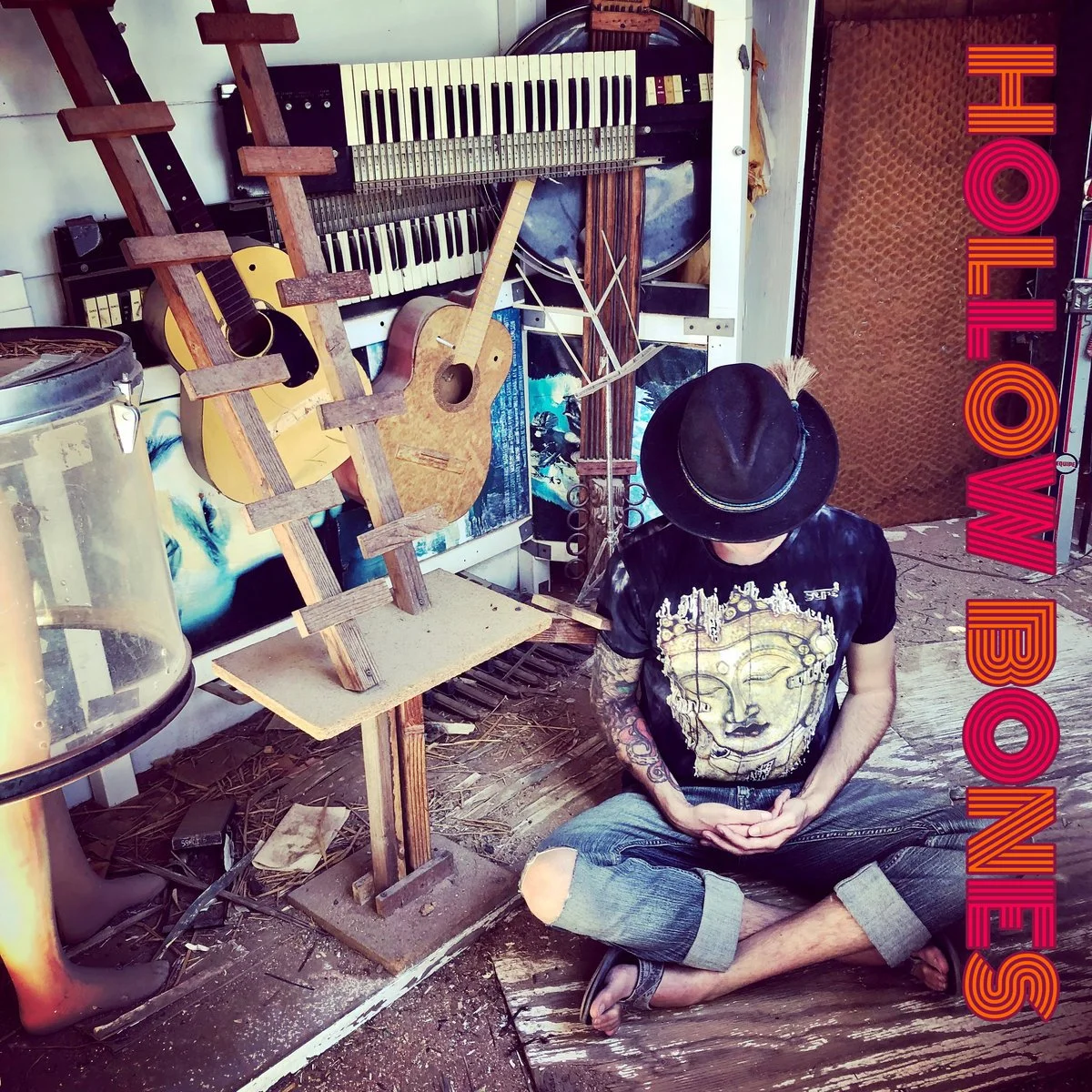
Shen Yi: I'm actually getting ready to release another EP. I release music every month on my Nich Von Patreon (www.patreon.com/cw/nichvon). I just did a rendition of the first paragraph of the Awakened Ones Vow. It's kind of like a psychedelic rock-and-roll imagining of Awakened Ones Vow. I did a Hollow Bones record (https://nichvon.bandcamp.com/album/hollow-bones). If you've ever rung the great bells at the temples like Dai Bosatsu, there's typically a prayer, “may this bell ring out into all of the hell realms and save everybody, liberate everyone.” I feel like music is just another way of ringing a bell. When we infuse the teachings of the Dharma into music, it just makes it a little sweeter, a little sugar for the medicine.
Ekai: It's lovely. I really appreciate that one of the ways that you make meaning out of what you're doing is to bring it into your musical creativity, and in a way that people can participate. Your music includes people, and others want to join you.
Shen Yi: I would say there's three pillars to the community, and they’re meditation, medicine and music. We spend a lot of time teaching the songs of the community to others so they can share their own light within a ceremonial context or in a retreat context. We strongly encourage people to share their voice. Putting things into a musical format helps people remember the teachings.
When we do shorter retreats, they are more hybrid, where there's music and the morning service. We bring in drums and guitars and group chanting. Our version of the morning service is a bit more rock-and-roll.
Ekai: I'm on the edge of my chair. The morning service, the Hollow Bones version, is a very unique animal because of what Jun Po did with it. It's nice to see you making life out of it. Is there anything on the horizon you want to have happen looking forward?
Shen Yi: The big dream right now is to find some land, five-ish acres, out here in the Mojave Desert, and to start building a little adobe quarter. Nothing extravagant, enough for someone to have a table and a cot and come and join us for retreats.
Ekai: Thank you Shen Yi for taking the time to share. You bring a quality which I think is a really key to the evolving of the Dharma at this stage. Your teaching allows people to make more sense of it and to make meaning in a way that's really powerful. As Song of Zazen says, “whether singing or dancing, we are the voice of the Dharma.”
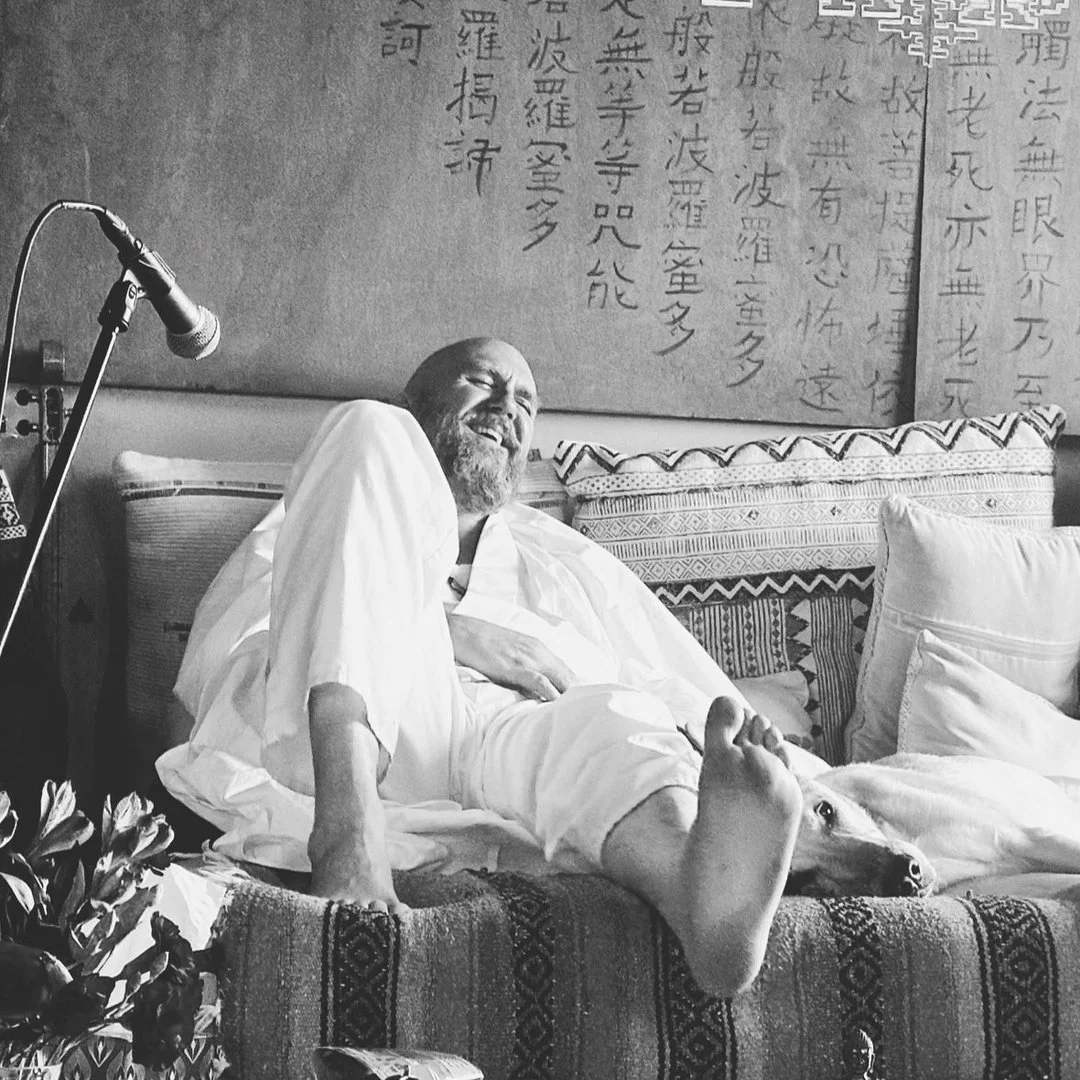
Shen Yi: When we sing together, we get that experience of one taste of all in the one, one and all. I don't know of a more expedient medium than when we sing together. It's transcendent. Thank you, Ekai, for being one of the beads on my mala, one of the contributors to the robes. I dedicate all my merit to you as well. Thank you.
Ekai: You're very welcome.