Confessions of a Buddhist Rebel
Simha Frederick Marx
Simha Frederick Marx has been with Hollow Bones and Jun Po Roshi for far longer than I. I’ve sat with him many times. He lived close by in Oakland. Simha is a renowned film director and producer as well as a notable author. He is able to get books to market steadily. His last two titles, Turds of Wisdom and Confessions of a Sacred Fool, offer wisdom and insight from the many years of creative endeavors that Simha has undertaken. You can get a better intro to him by checking out this article in UK Entrepreneur. Simha is about to bring his project Veterans Return Home to Ukraine. You can read more about that here. We caught up on Zoom a few weeks ago.
Ekai: I'm with Simha Frederick Marx. Not only is Simha an author, film director, and producer, he is also a Hollow Bones Zen priest and teacher. Simha, welcome. Let’s start with this: how did you begin meditation?
Simha: My practice began in 1988 in New York City when I was first introduced to Nichiren Shoshu, a Japanese Lotus Sutra school. We would chant Namu Myoho Renge Kyo. I loved the practice, and it did a lot for me for seven or eight years.
When I got stuck, I shifted into sitting meditation with a four-day Vipassana retreat. In silent meditation, I had to finally confront my own mind, which terrified me. But I found that I could actually discover great peace and comfort there.
In January of 2000, I met Jun Po Roshi. I was introduced to him by Bill Kauth, the founder of the ManKind Project. We were at a conference in Glen Ivy, a hot springs resort in Southern California. He invited me to sit with him. He gave a talk at the conference with Fugen Tom Pitner Roshi.
I basically committed then and there to join the next Hollow Bones retreat, which was in Providence, Rhode Island.
Ekai: It seems like it really resonated with you. Was it Jun Po himself, his teachings, or both?
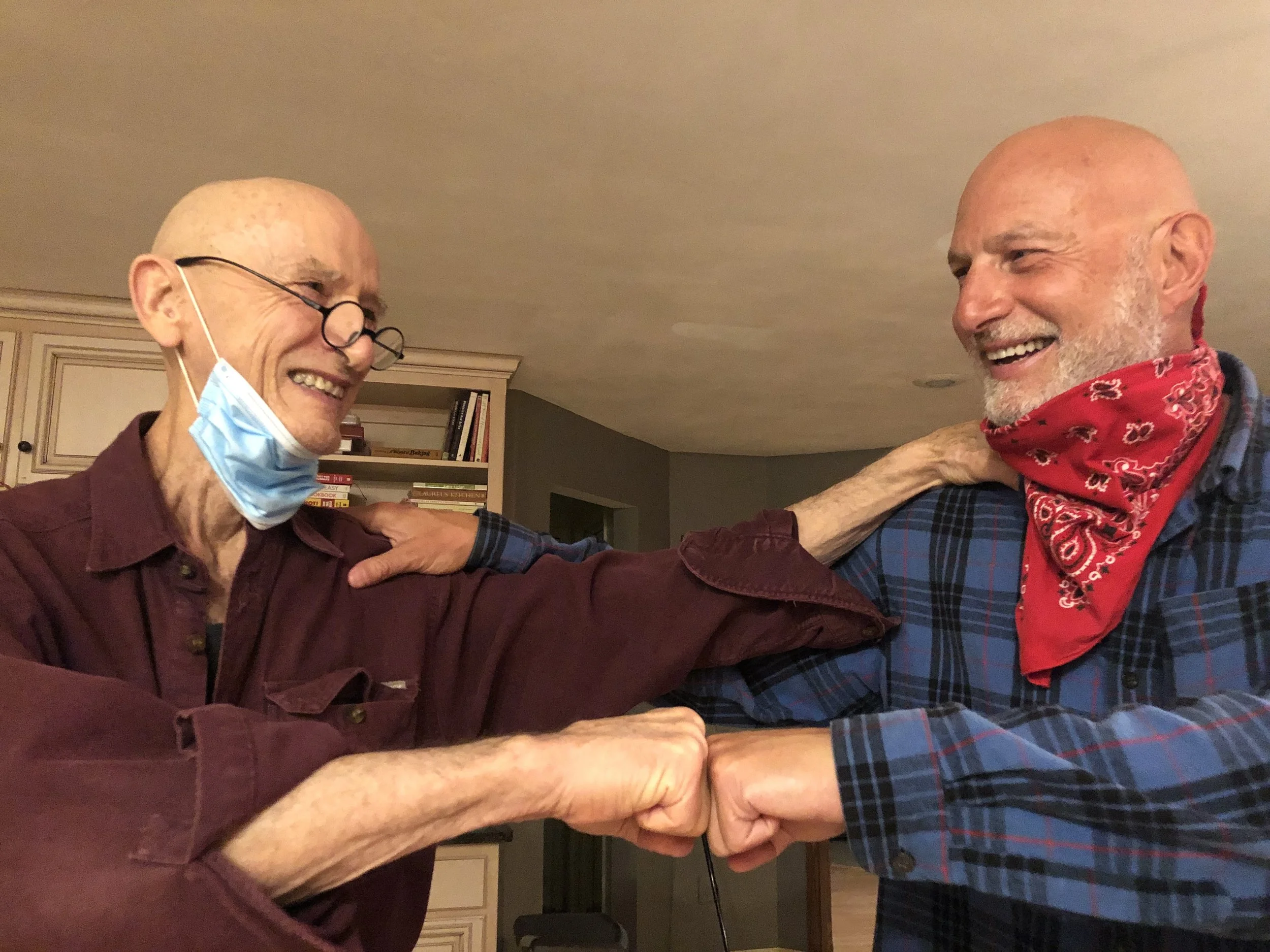
Simha: I've always been an adventurer, a kind of psychic explorer. I was drawn to Jun Po himself; he was incredibly charismatic. We had a lot of fun shooting the shit.
And yes, I'm always open to deepening my understanding of the dharma. To this day, I consider myself a student of all forms of dharma. I have my preferences, which lead me to predominantly teach and practice in the Rinzai Zen form, but certainly not exclusively.
I've also worked with Tibetan Buddhism over the years. I made a film with Tibetans. I welcome any opportunity to meet other dharma practitioners. I never met a branch of the dharma that I didn’t love and appreciate.
Ekai: It seems like, at this stage, Zen, particularly the Rinzai side, is what feels most congruent for you.
Simha: That’s absolutely true, and it's the one I've been practicing for about twenty-six years now. Over that time, I sat maybe fifteen or sixteen Hollow Bones retreats. I kept a pace of about one every other year.
Jun Po was accurate in pointing out my tendency to slide back into the warm bed of my own neuroses and feel very comfortable there. He said, “I think you need one of these at least once a year to blow out the pipes.”
He was right.
More recently, when I need a retreat, I’ll just book a cottage at a retreat center wherever I can and create my own retreat for five or six days. I think it’s also important to be a self-diagnostician. When I see my neuroses rearing their ugly heads, it’s time to calm them down.
There’s something wonderful about withdrawing from everything, just sitting with yourself and stripping it all away. When I last did that, two years ago, I was stuck in an anger loop. It wasn’t wholesome. So I did what I needed to do.
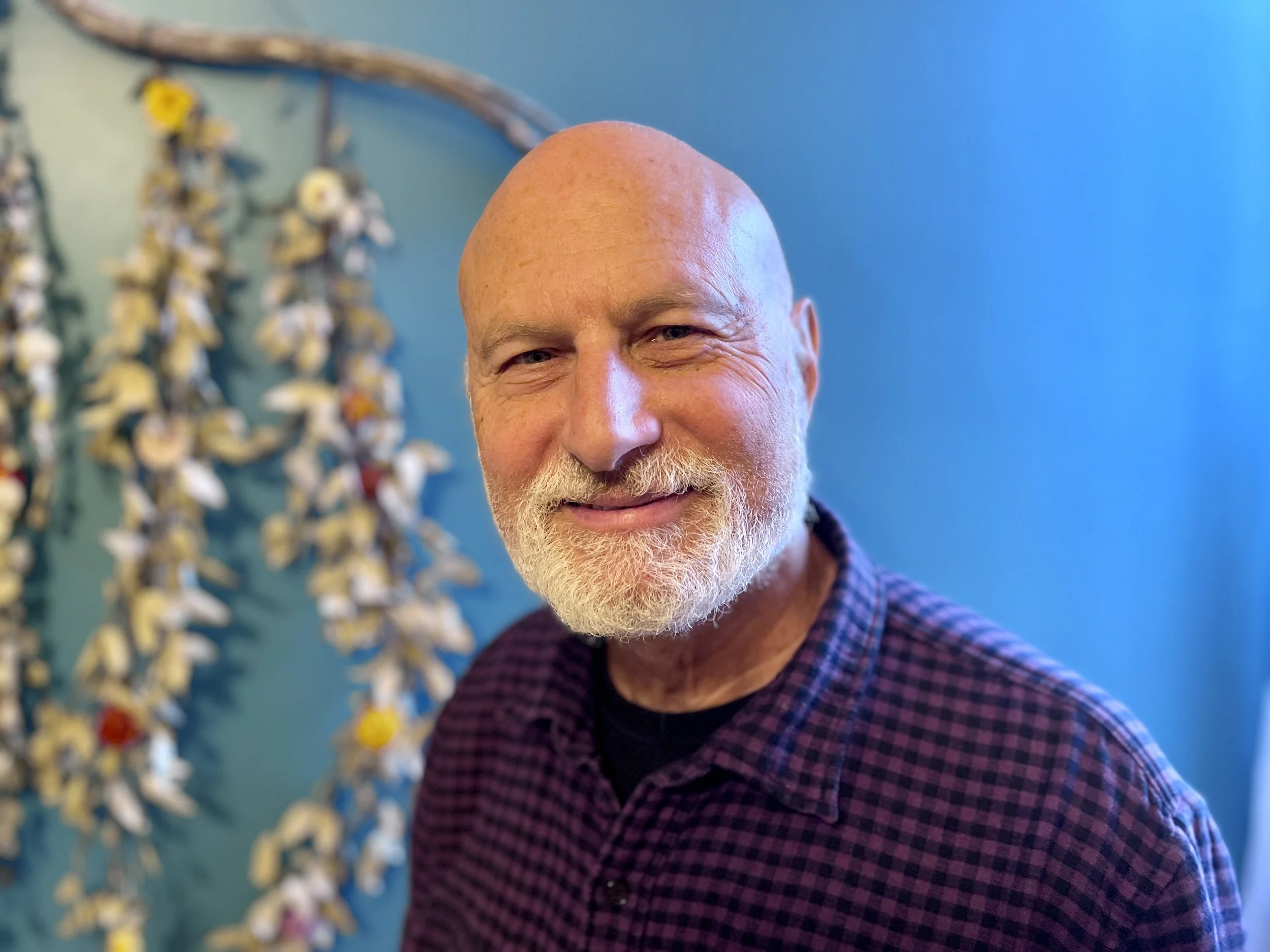
Ekai: I know you recently started a sangha. You've been a teacher, a filmmaker, an author—and now a Zen teacher.
Simha: Yes, and it's long overdue. Back in 1989 I had a vision of my elder years. It happened one morning while I was chanting. I saw that I would become a teacher, and that it would be important and fulfilling for me. I finally pulled the trigger this past fall.
Ekai: Nice. And it's local, you’re in Auburn, California.
Simha: Yes. It’s going to take a while to build. I’m committed for at least a year to see if we can grow it.
We already have five to ten people showing up regularly. I take that as a very good sign. More importantly, I have so much fun doing it. I just cannot envision ever stopping. I love it.
Ekai: Good for you. What kind of practices do you use in your sangha?
Simha: We open with Atta Dipa. We close with the Four Awakened Vows. I share different elements of the dharma. We’ve already talked about the Great Wisdom Heart Sutra, arguably one of the most important teachings of the Buddha.
We’re making our way through the Hollow Bones Sutra Book. Right now, we’re talking about the Song of Zazen.
Ekai: Beautiful. A lot of work went into that particular sutra book. You have a lot of joy in your voice when you talk about it. Sangha building is a very social thing, isn’t it?
Simha: It is, and I love that aspect of it.
I made a flyer that I posted around town. It had only four words at the top. The first word, in bold, was Suffering? And the next three words underneath were: This might help.
Ekai: Nice.
Simha: When you look around, the world is suffering. People are in pain, every kind of pain. I feel really called to offer something that can help alleviate that suffering.
Ekai: That’s the first of the Four Noble Truths.
Simha: I feel like I'm coming near the end of my active career. Not because I’ve lost interest in making films or writing books. I’m still doing both. But the world has changed so much. It’s difficult to raise money for films now. And it's even harder to find an audience for books or films.
So it serves me, and I think others, to shift more toward interpersonal teaching.
Ekai: That makes sense. Two of your books have the words Buddhist Rebel in the title, and your most recent one is Confessions of a Sacred Fool: Absurdities and Wisdom from a Buddhist Rebel. That seems like an identity that matters to you. Tell me a little about how you see yourself as a rebel.
Simha: In a sense, that’s what the first chapter of the last book is about. It’s called Heyokha, which is a Lakota term meaning rebel or trickster. There’s really no direct translation into English. But rebel is certainly part of it. Trickster is part of it. Crazy wisdom might be part of it too.
It actually came to me while sitting with you, Fugen, and the sangha at All Nations Gathering Center about four years ago. It just dawned on me: I’m just fucking Heyokha. Accept it and be good with it.
I recognize that many of the stances I take in relation to general society are not commonly held—and they’re not always appreciated. And that’s fine.
The Heyoka part of me has been an important contributor to all my artwork over the years. I’ve always been self-directed. I’ve rarely worked for others. It’s important for me to live fully in that role.
Ekai: And there’s something about it that allows you to be a truth-teller. Through that role, you can say things others might not say. What do you think?
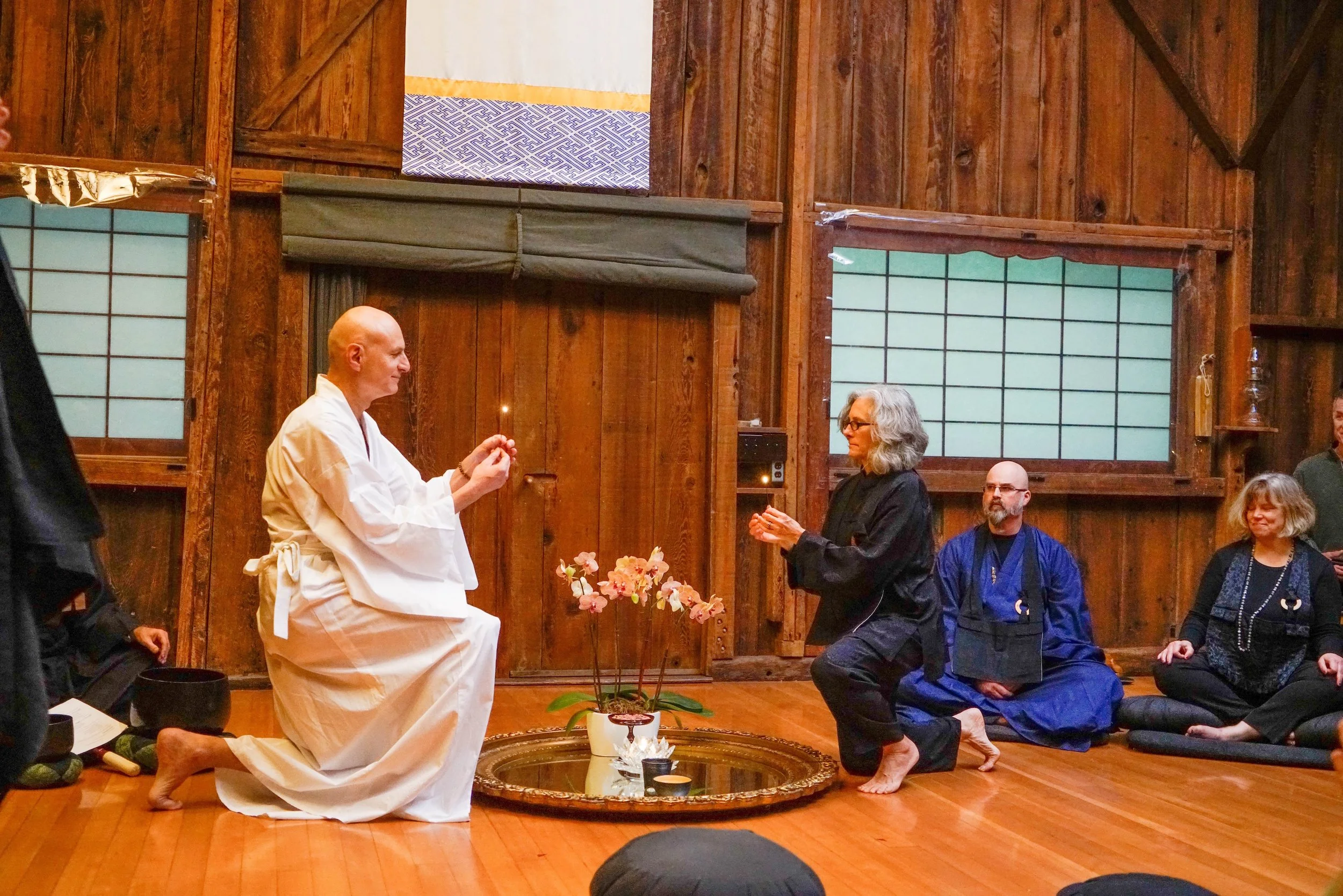
Simha: Absolutely. Part of the beauty of the Heyokha role in traditional Lakota culture is that they were an accepted part of that society. People understood that the messages they carried were important—even if they seemed wild or outrageous.
But we don’t live in a society like that anymore. People don’t necessarily invite or welcome the perspectives that truth-tellers bring.
It is in my deepest nature to speak the truth as I understand it. But I’ve learned over the years that it’s important to be somewhat circumspect about how and when I do that. It doesn’t help to antagonize people, and that’s not my aim.
But sometimes it becomes necessary. The truth needs to be spoken. I walk that line all the time.
Ekai: Heyokha can call people out on what’s really happening—and that can get us in trouble. How does that fit into a Buddhist perspective?
Simha: I see some Buddhist teachers as fellow Heyokha spirits. Certainly, Jun Po was one. And Chögyam Trungpa Rinpoche.
There’s a rich tradition—mostly in Tibetan Buddhism—that allows for what we call Crazy Wisdom. But you see it elsewhere too.
What about Bodhidharma?
Certainly, the Buddha himself was a truth-teller—though arguably far more skillful than even the greatest Crazy Wisdom teachers. In his own time and place, he was a rebel too. People forget that.
I remember a story in one of Thich Nhat Hanh’s books about the Buddha being spit on by a woman while walking through a village. His attendant was shocked that the Buddha didn’t react. He didn’t say anything, just kept walking.
Later that evening, the attendant asked him about it. The Buddha said, essentially: when someone brings a gift to your door, you don’t have to accept it. If you don’t accept the gift, whose gift is it?
Ekai: Great story. And a reminder that even in his own day, there were many competing teachers. The Buddha was not universally admired.
Are there any teachers you feel connected to right now?
Simha: During my Vipassana years, I had a personal connection with Jack Kornfield. We became friends. I recently sent him the Confessions book with an inscription thanking him for a lifetime of teaching.
I bow deeply to him in gratitude. I consider him one of my great lifetime teachers.
Joseph Goldstein as well. I met him and consider him a friend. He’s a wonderful teacher.
These days I’m also drawn to non-dual approaches like the Headless Way. I just want people to wake up to the fact that they already have Buddhanature. I try to rip away the shrouds of misconception so they can recognize their true nature.
Ekai: It’s exciting work. I appreciate your clarity. I’ve got one more question about what’s ahead. You mentioned you’re writing another book.Is it too early to talk about it?
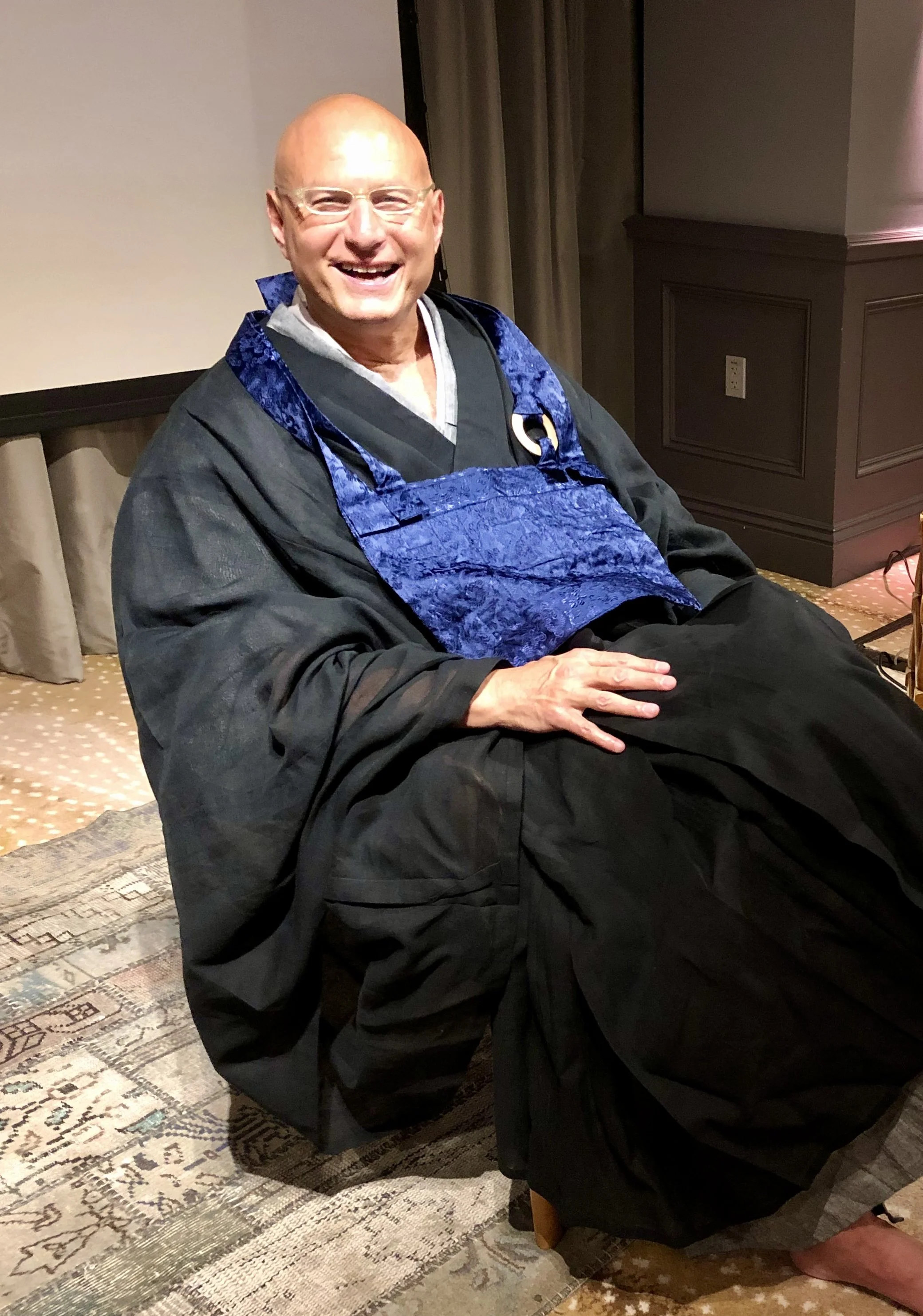
Simha: Not at all. It will follow the same format as the last two books. For some reason I seem to have hit a vein writing these short mini essays on themes that interest me.
Some are anecdotes from my own rich and bountiful life. Others are reflections on the contemporary world we’re living in.
All of it is framed by my perspective, which tends to highlight the absurdity of things. That’s good because it keeps me laughing, and I want my readers laughing too, even when we’re facing difficult circumstances.
I’m also traveling to Ukraine in April. I’ll be screening my film series Veterans Journey Home in five cities there.
Ekai: Good for you.
Simha: I feel the films carry important messages that might be meaningful for a society currently facing so much suffering.
Ekai: Thank you for sharing this. I’ve seen many of your films over the years. That’s going to be a powerful experience—for you and for the people there.
Thank you, my friend. I’m glad you’re doing so well. I appreciate you taking the time.
Simha: My pleasure. Great talking with you.