Certified to Begin Part 1
Ekai Joel Kreisberg Roshi
Ekai Joel Kreisberg is the founder and spiritual director of Shining Bright Lotus. He received Inka recognition as a Roshi this October in the lineage of Jun Po Roshi. Here he discusses the past, present and future for himself, Mondo Zen and Shining Bright Lotus with board member Kishin Sarah Saleemi.
Kishin: I just wanted to say thank you for letting me do this with you. It's really an honor. I noticed you put out quite a lot of content, but none of it really talks about you as a person. You've helped a lot of people, myself included, so I think a lot of people will be interested in hearing about you from a first-person perspective.
Ekai: Thank you.
Kishin: Let’s give people some type of context for what's going on. What has it meant for you, your family and community, to have received Inka recently?
Ekai: (laughs) Well, that's three questions. I'll start with me. I feel like I arrived, and it’s something I worked hard for. I didn't have a quest to become a Roshi. Jun Po talked to me about giving Inka to me, but he just wasn't capable of doing it at that point in his life due to his physical health. At that time, I was figuring out what it meant to be a priest. It wasn't like, oh, I want to do this. Now, I feel it's an honor. It’s definitely an obligation to honor the lineage. I continue to make sense of it.
I feel proud. I have a lot of satisfaction that goes along with becoming a Roshi. For most of my friends and my family, however, it doesn't really mean a whole lot. Many don't even know. And if I say what it is, they don't even know what that is. I'm going to teach a meditation class at my synagogue, and no one has any clue.
Kishin: So, your life is a little compartmentalized in that sense.
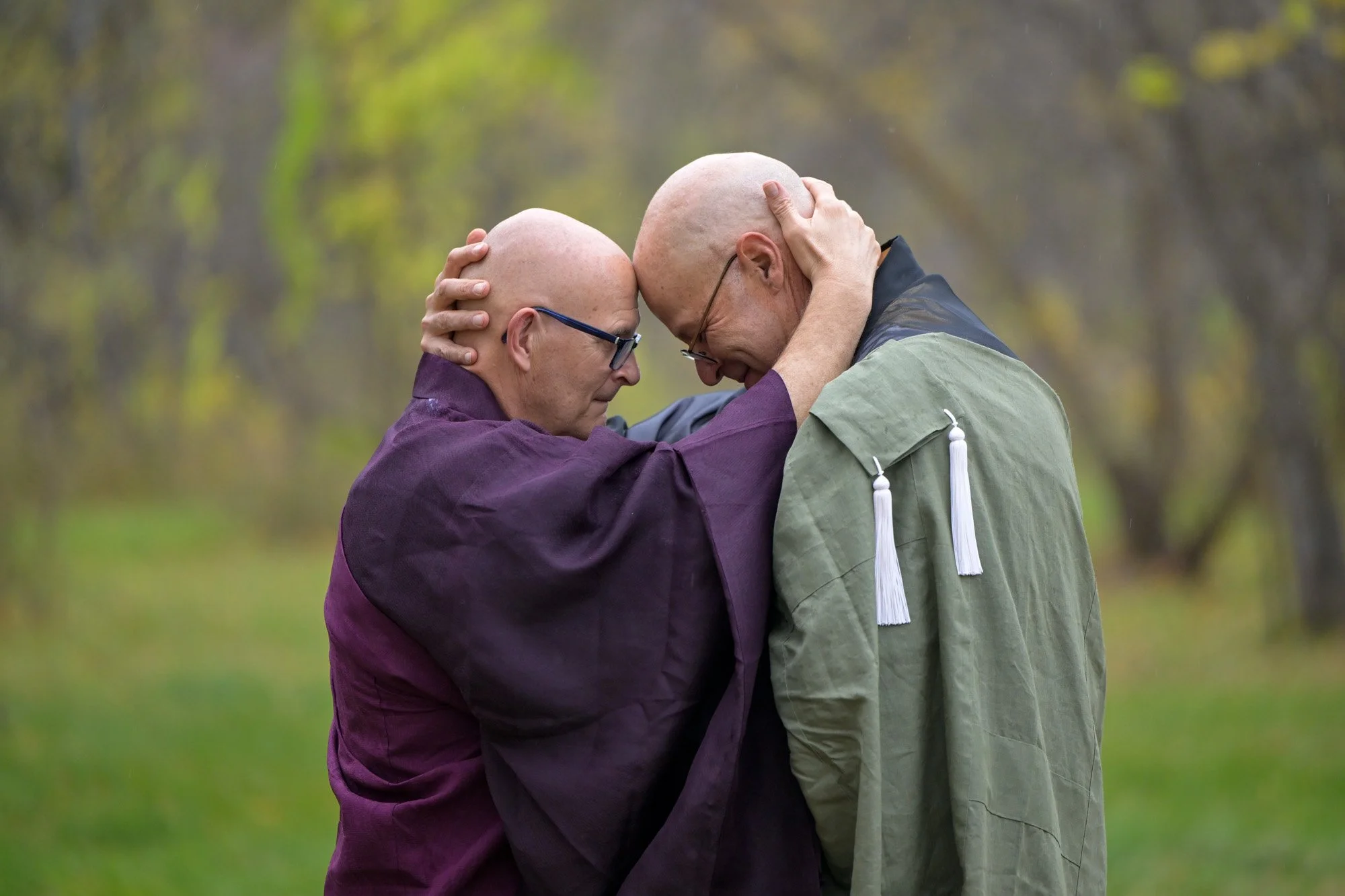
Photo Courtesy of Darrin Harris Frisby, © Copyright 2026 www.darrinharrisfrisby.com
Ekai: In that way it is, and it's probably because of the way Zoom is. Some people really wear their Roshi identities. Koshin Sensei of New York Zen Center changed his name legally to Koshin. Jun Po Roshi introduced himself as Jun Po. I don't see that for me at this particular stage of the game. I'm still Ekai. However, my students and the folks of the Sangha seem to be really proud. They like calling me Roshi, and there's a sense of pride that I notice from a lot of people. They like the way it sounds and that it's nice to be with me. I've been honored, and now they're with a more “recognized” person.
Kishin: Like the hometown hero!
Ekai: There is that quality. And so there's a lot of affection that's come up from various sangha members, so they call me Roshi. It's not formal, right? Because Japanese is very formal, you would never just call the Roshi by their first name or their title. You would always use their title and their name.
Kishin: It’s interesting because you've worked very hard to get to this point. In some ways, it seems to represent the end of a cycle and the beginning of a new cycle. You sort of reached the peak in terms of the hierarchy, if you will, and now you have to do something else.
Ekai: Well actually, Roshi is really a beginning. The way I understand it is, Inka is certification. That's what the word Inka means. There are a lot of Roshis out there in the world. They are the teacher class. The ones that go down in history are the ones that made something of it. But many Roshis just serve. It really is the beginning of being an authorized teacher. And that, for me, is wonderful because I'm already a teacher. I don't need someone to give me the authority to be a teacher. But now, I have the authority to be a teacher in the thing that I do, which is Zen. That feels freeing.
Kishin: It seems like it's something that could open up more opportunities.
Kishin: Definitely, because it's a title that is recognized within the system. It will have value in that particular way. And it remains to be seen what that's going to look like.
Kishin: I'm excited to find out. So how did we get here?
Ekai: It wasn't like “Mom, I really want to be a Zen priest when I grow up. I want to be a Roshi.” I discovered Jun Po Roshi listening to Ken Wilber interviews. Jun Po Roshi was considered an integrally informed practitioner. I found out that he offered sesshins near me in California. I always remember the year because I couldn't go that year, my daughter was having her Bat Mitzvah the same weekend as the sesshin. She’s 28 now, so I have a good idea of exactly what year that was – 2010.
I did go the next year, and it just worked. It naturally took me in. I liked the practice. It made sense for me. I started doing it. Jun Po Roshi’s particular style is that “You don't really know it until you can teach it to somebody else.” He had what I call a reciprocal teaching style. It's one thing to learn it, but if you really want to know it, you have to be able to teach it to someone else. That really resonates with me. So, I started doing it very quickly. In Jun Po’s world, I was authorized to do it, because he authorized everyone to do it. So that led me to disseminate his teachings.
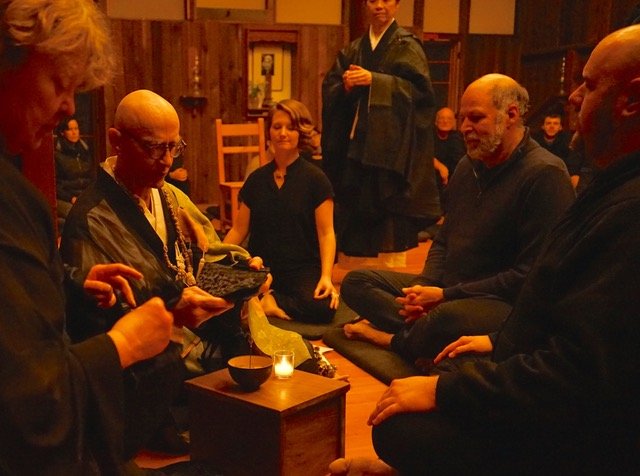
Mondo Zen Facilitation was something that everybody should do with everybody all the time. I call it the “grass seed” model. You throw out lots of seeds, and wherever they grow, they grow, and you don't worry about it. I took Jukai in 2015, and then I was curious about what it would be like if I studied further. I became a priest in 2018. Jun Po Roshi gave me this big book list. Of course, I read all the books, and I did the Mondo Koans myself. I discovered who had read all the books and who hadn't. You got ordained first, and then you studied second. At Shining Bright Lotus, we train first as a novice priest and a then as a senior priest. But Jun Po Roshi just made everybody priests. There was no junior and senior.
Kishin: That's really interesting because when you put it that way, it almost sounds like you’re introducing more hierarchy, which some people might consider gatekeeping. But it actually sounds like you're trying to introduce structure to help people gain certain skills.
Ekai: Yes, a priest is more than just a person who runs services. A priest provides pastoral care and counseling. You asked about my bio. I'm a care provider trained as an integrated physician. I looked at the role of priest as providing care, pastoral service care for people. The way Jun Po rolled it out, priests really were folks who were students of his dharma. And so you learned a lot about how to run the ceremonies that he created, which are very interesting and novel. And that was the main thing that you did. But it's more than that to me - which is why I started training priests.
I went back to Jun Po, and I said I think we could do a better job at training Mondo Facilitators. He challenged me to create the program, so I created the Mondo Facilitator Program, which was a more robust training. I did this with Fugen Roshi, who was the last dharma heir of Jun Po Roshi. He and I created the Mondo Facilitator Program. He then wanted to start training priests. He turned around and had me do the training of his students in pastoral counseling. He likes what I do. It isn't that much different from training doctors or healers.
Kishin: Did you ever consider becoming like a rabbi?
Ekai: Not really. I was definitely more interested in Eastern religion than Western religion. On going to college, I started reading Tibetan texts like Tibetan Book of the Dead and others like Three Pillars of Zen. When I graduated from college, I got Light on Yoga by B.K.S. Iyengar, and I started practicing yoga. That slowly led me into meditation. My first meditation was Insight Meditation. It's got no bells and whistles. I did that for a long time, 15 years, before I met Jun Po Roshi.
I've always been a cultural Jew. I go to high holidays, and that's what I was taught as a kid. Jewish is when you go to synagogue a couple times a year, and then you inhabit Jewish delis.
Kishin: (laughs) So you go to college, you study Tibetan Buddhism and yoga, and then after college, were you a musician for some period of time?
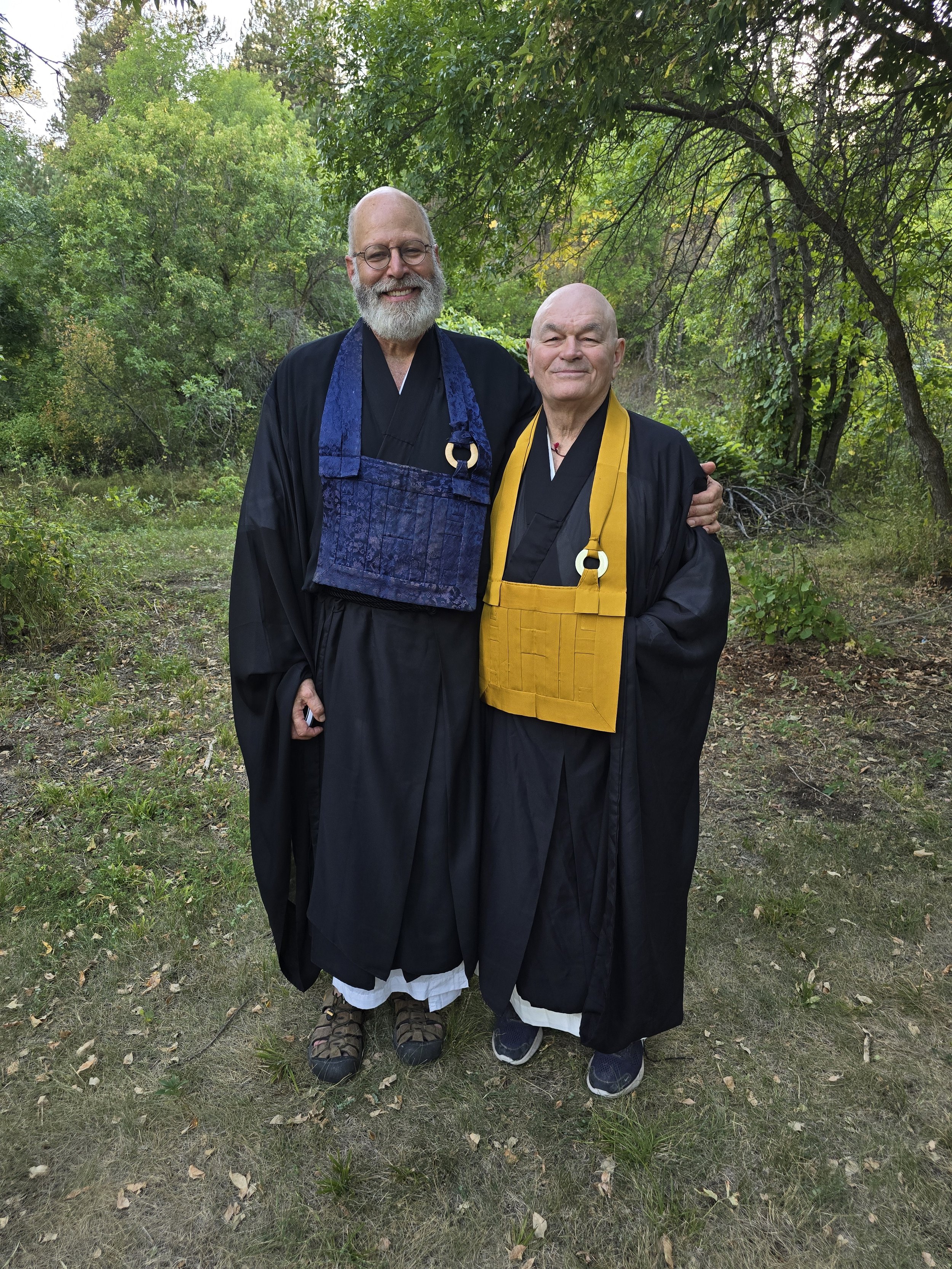
Ekai: My undergraduate was in jazz composition, and I was trained as a music teacher. My first career was teaching elementary school music. I went back to get a Master’s in music, and that's when I cashed it all in to get my pre-med science. I decided to go into complementary medicine versus mainstream medicine. That was seven years of training, so it wasn't really any different. My father could never understand why I didn't want to just become an MD.
Kishin: It's interesting that you taught elementary school kids music because I've heard the opinion that teaching music to children helps build their character in addition to building their musical skills.
Ekai: I'm trained in something called Orff Schulwerk, and it's basically liberal arts training for eight- to ten-year-olds. It's one of the more amazing things. You're teaching them that they can be creative and expressive and they can be embodied. And it's not about learning how to read classical music. It's about finding yourself in the music. It was lovely. All the kids that go through Orff Schulwerk training will always have an appreciation for performance arts, whether they play again or not. They get that “this is how people express themselves.”
Kishin: How many years would you have relationships with these kids when you were teaching them?
Ekai: I taught for three years, and I got to teach in one of the premier programs because I covered for the senior teacher was went on sabbatical. At this particular school, you had music five days a week from first grade to fifth grade. You learn to play xylophones and recorders. The idea is you don't pick up an instrument like a traditional band instrument because you want to learn how to express and understand the music before you go on to play a piano or a violin.
Kishin: It's really interesting, actually, that you worked with kids because now you're a teacher for a lot of adults in Zen and spirituality.
Ekai: It translates really well, and sometimes it gets me in trouble. At the last retreat, on the third night, I just decided to sing the closing Gatha, and I just invented a song and taught everyone how to sing it. It was great. I've done that twice at two big medical conferences. I chose to teach 500 naturopaths, and not everybody thought it was so interesting and fun and cute.
Kishin: (laughs) Okay, how did you get interested in Integral Theory?
Ekai: That goes back to becoming a physician. I was definitely a wounded healer type. So, I knew I wanted to go into medicine. I was sick, and I was trying to figure out how to get myself better. So, I just started going to lots of different types of practitioners, like acupuncturists, chiropractors and homeopaths. I liked hands-on healing. So, I ended up going to chiropractic school, which wasn't the best choice. I actually then went to homeopathy school, and I did both degrees simultaneously. But there was something about looking around at all the different types of medicine, and I bumped into Integral Theory. The Integral Theory of Ken Wilber offers a meta-theory that allows you to plug everything in. So now I could finally see the different orientations.
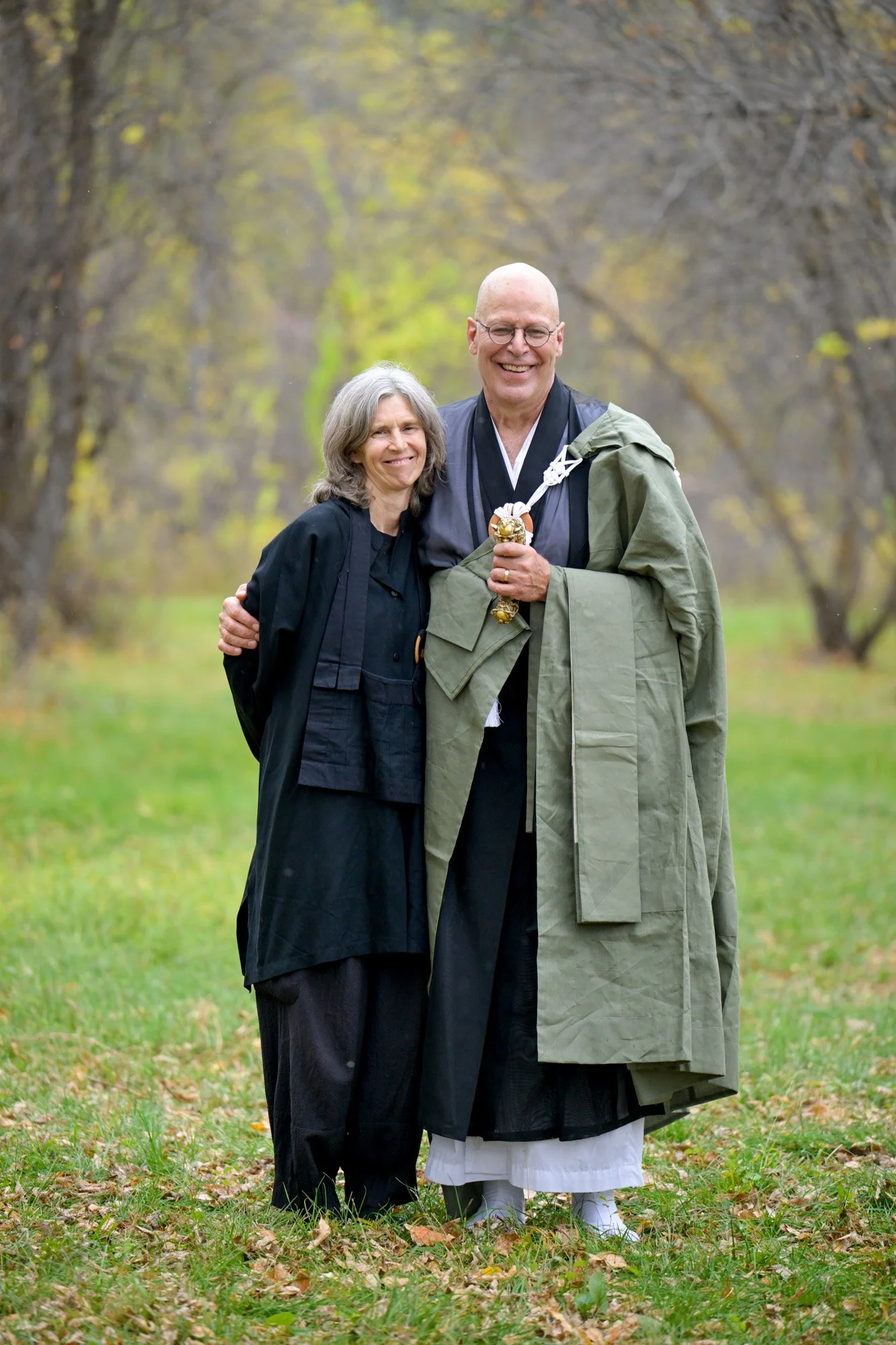
Photo Courtesy of Darrin Harris Frisby, © Copyright 2026 www.darrinharrisfrisby.com
Let’s pick chiropractic. You can do chiropractic from the perspective of a barber. It's just bones out of line, and you're bone setting and putting them back, and that's a perfectly fine way of doing it. It's a very concrete approach to chiropractic. Or chiropractors can be sophisticated energy healers. They're like magicians in the guise of knowing how to use their hands. They're doing energy work, nutrition, herbal medicine, or homeopathy. They're not looking at the concrete anymore. They're looking at the person as a subtle phenomenon. It's not just the bones in their back. It's the whole energetic system that needs to be restored, and you do that with a variety of techniques.
Integral Theory gave me the ability to make sense of that. I just started gobbling it up, reading everything Ken wrote. I ended up getting a Master's degree in Integral Ecology in 2005. I applied this back to medicine. I designed a bunch of programs in medicine as ecological phenomenon. One program that stuck was the Safe Drug Disposal program. We made it mandatory in Alameda County, California for the pharmaceutical industry to provide a means to take back old, unused medicines. It's product stewardship for drugs. Now there are similar laws in 25 states in the US. So, we were the first municipality to make that a law. I ran the consulting team that created this program.
Kishin: That’s great. It’s much better than people flushing it down the toilet or their kids getting into it.
Ekai: If you make it and you're making money off it, then you should pay for cleaning it up. That's the ecological principle. So, I did that for seven years and then went back to teaching and working with individuals. I taught at John F. Kennedy University, a graduate school, in a Master’s in Health Education program.
Read the rest of this interview in Certified to Begin - Pt. 2.