Becoming a Cosmopolitan Zen Priest
This September, we will start our first three-year training program for Zen clergy. Unlike the traditional training which heavily relies on ango, sesshin, and dokusan as the learning environment, in a Cosmopolitan Zen setting, we bring in considerable skill development from developmental psychology, contemplative care, and several healing modalities to supplement traditional Zen praxis. If you are interested in finding out more, contact me directly at ekai@shiningbrightlotus.org.
My teacher, Jun Po Roshi, ordained novice priests quite freely. My last count was that 52 clergy were ordained in the Hollow Bones Zen order in fewer than fifteen years. Students in those days attended sesshin many times, and some of Jun Po’s students were ready to take their seats in more significant leadership roles.
When I was ordained in 2018, I was given a list of books for study. I met regularly with Jun Po Roshi in dokusan and actively worked with emotional koans. What was never clearly articulated, however, was the expected role of a Hollow Bones priest. What did it mean to move from being a committed Zen student to becoming clergy?
Before Jun Po Roshi passed away, I created a more programmatic approach to clergy training at Hollow Bones. We organized levels of curriculum, moving from introductory training to stream entry and, finally, clergy formation. I conceived of a three-year training commitment for clergy. It began with Mondo Zen Facilitation training, followed by sustained engagement with traditional Zen literature and an ongoing commitment to practice.
For novice clergy, the first two years consisted of study and training, followed by a third year of supervision with teachers and mentors. During that final year, the emerging Zen priest was expected to begin considering the direction of their ministry: what kind of priest might they become, and what particular needs might their ministry address?
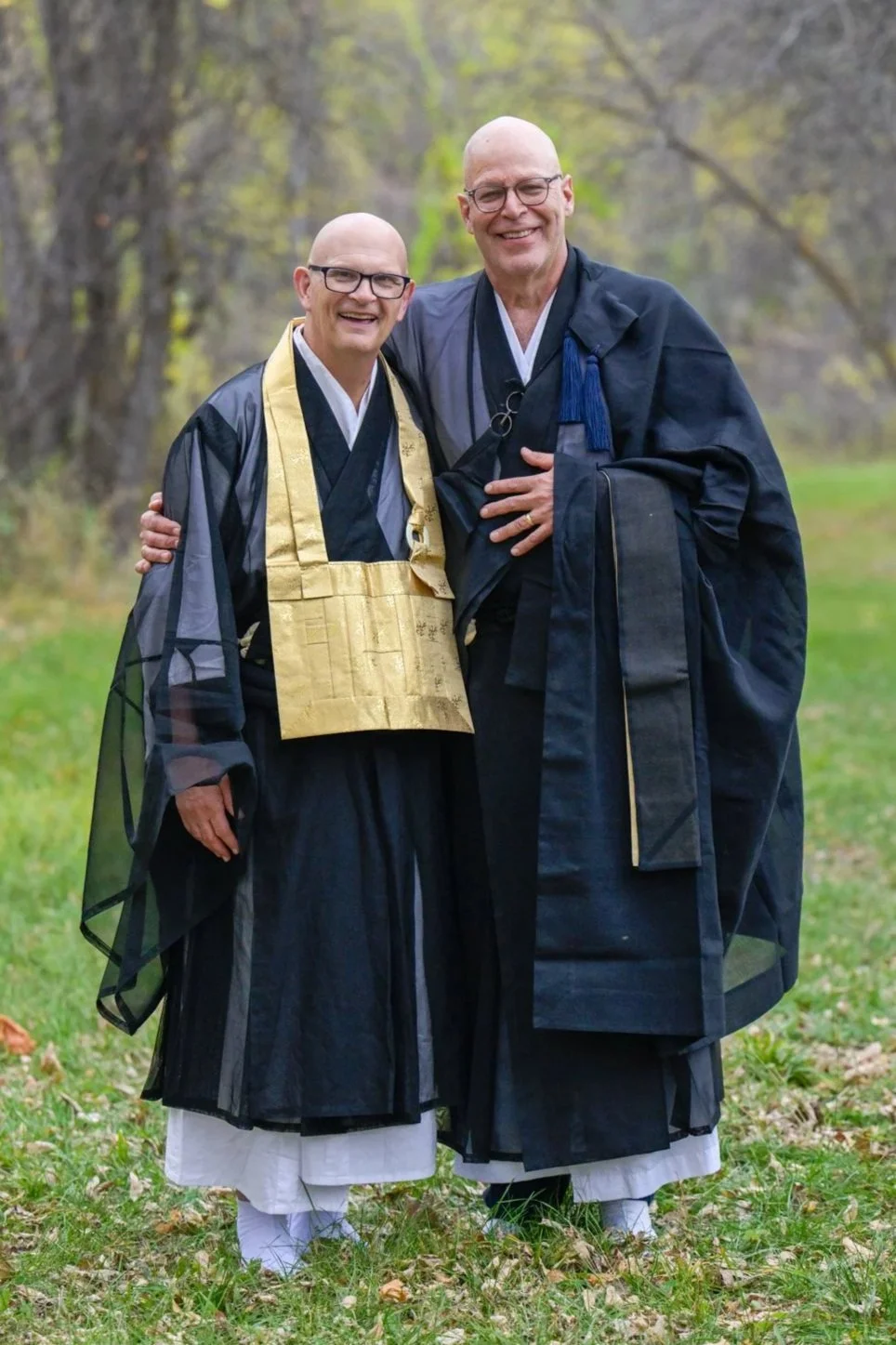
Fugen Roshi and Ekai Roshi
I ran this program at Hollow Bones Zen for three years. Fugen Roshi and I led the first year of Mondo Zen Facilitation training. Umi Dan Rotnem and Taiso Roshi guided students through a year of sutra study and ethics. When I left Hollow Bones, the third year of the program was dropped.
My second opportunity to train clergy came when Fugen Roshi asked me to train the first group of priests for Dragon Heart Dharma. Using a similar three-year design, I expanded the program to include pastoral counseling. I continued to mentor his original novice priests through their third year.
This fall, Shining Bright Lotus Meditation Society will offer our first clergy training program. This article introduces the key elements of that three-year commitment.
Three Foundations of Cosmopolitan Zen Clergy
Three elements inform the skills and mindset of a Cosmopolitan Zen priest:
Mastering the skills of teaching meditation
Developing an ongoing commitment to pastoral counseling
Mastering the ritual forms developed by Jun Po Roshi and becoming comfortable leading ceremonies
These three areas are complementary. A Zen priest must be able to teach practice, accompany people through suffering, and embody and transmit the ritual forms of the tradition.
Teaching Meditation
While not all forms of Buddhism focus on meditation, Zen certainly does. With the increased public exposure to mindfulness and meditation, teaching meditation is a natural role for Zen clergy. Historically, this meant becoming mature meditator. One might think that should be relatively easy, given the ongoing commitment to zazen. However, teaching is not the same as doing.
Teaching meditation is not fundamentally different from teaching other kinds of concentrative skills. A teacher must learn the basics of pedagogy. At SBLMS, we use what I think of as a virtuous cycle of learning: Set → Seek → Apply → Reflect/Assess → Reset. Simply put, we set a goal or intention, seek the necessary elements to accomplish that goal, apply the tools through active engagement, and then reflect on the experience. Through that assessment, we establish a new and more refined goal, reset. Each cycle offers greater clarity and reinforces positive learning.
Zen meditation involves substantial periods of silence, which is traditionally thought of as “wall gazing.” Yet reflecting on and talking about one's meditation increases one's ability to learn and to concentrate. Of course, one needs to meditate daily. But having a teacher guide a group through repeated cycles of learning vastly improves meditative capacity.
At SBLMS, we use The Mind Illuminated by Culadasa as a training manual. While it is not specifically a Zen approach, Culadasa provides a detailed articulation of the nine stages of calm abiding, or shamatha, concentration practice. It gives our students a useful framework for understanding what happens as meditation develops and, importantly, for learning how to teach those skills to others.
Pastoral Counseling
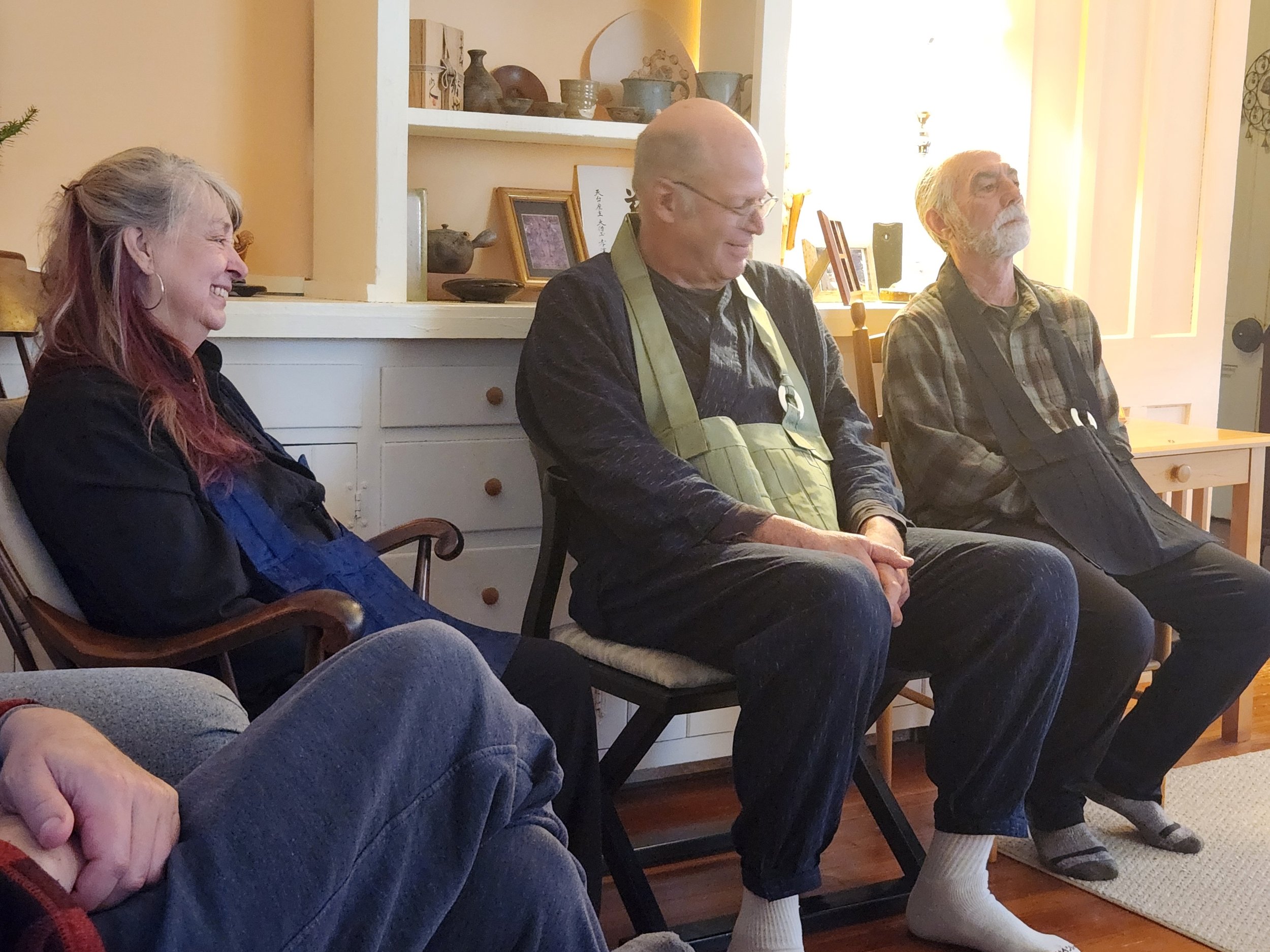
Reflections at the end of a weekend retreat
Learning to be fully present for another person is essential to Zen encounters. Through listening, reflection, and healthy interaction with a variety of individuals in a variety of circumstances, pastoral counseling integrates spiritual care with more traditional counseling skills.
The Mahayana vow provides a baseline for cultivating compassion. Pastoral counseling gives us practical skills for turning this aspiration into healing interactions. Taking compassionate action is as much about how one shows up as it is about what one does.
Cosmopolitan Zen builds on Jun Po Roshi's commitment to emotional maturity. Rather than bypassing our reactivity, we seek to open ourselves to the deeper meaning and value contained within our emotional responses. Our Zen practice becomes a way of meeting emotions rather than simply suppressing or transcending them.
At the same time, we seek to include contemporary psychology, theology, and scientifically informed approaches as we learn how to be present with individual trauma and collective suffering. Zen clergy encounter people whose lives are shaped by grief, fear, shame, anger, loss, confusion, and many other forms of suffering. Spiritual practice does not make these realities disappear. It gives us ways of meeting them with greater awareness and compassion.
Developing skills in pastoral counseling is a lifelong commitment. It does not end when someone is ordained as a priest. In many ways, ordination marks the beginning of a deeper responsibility to continue developing these skills as one steps into active clergy roles.
Mastering Ritual Practice
Zen evolved from India, through China as Chan, and through Japan in forms including Rinzai and Soto practice. As Zen continues to take root in the West, we are developing a new language and new cultural expressions for these practices. At the same time, the traditional rituals and forms remain an important part of our lineage.
Sesshin forms and ceremonies provide necessary means for honoring and embodying that tradition. They also provide powerful containers for collective practice. In this sense, Zen practice is not unlike the performing arts. The practitioner learns a variety of roles, gestures, movements, chants, and forms. Performance is an essential aspect of practice. The priest is not simply explaining a tradition; the priest is embodying it.
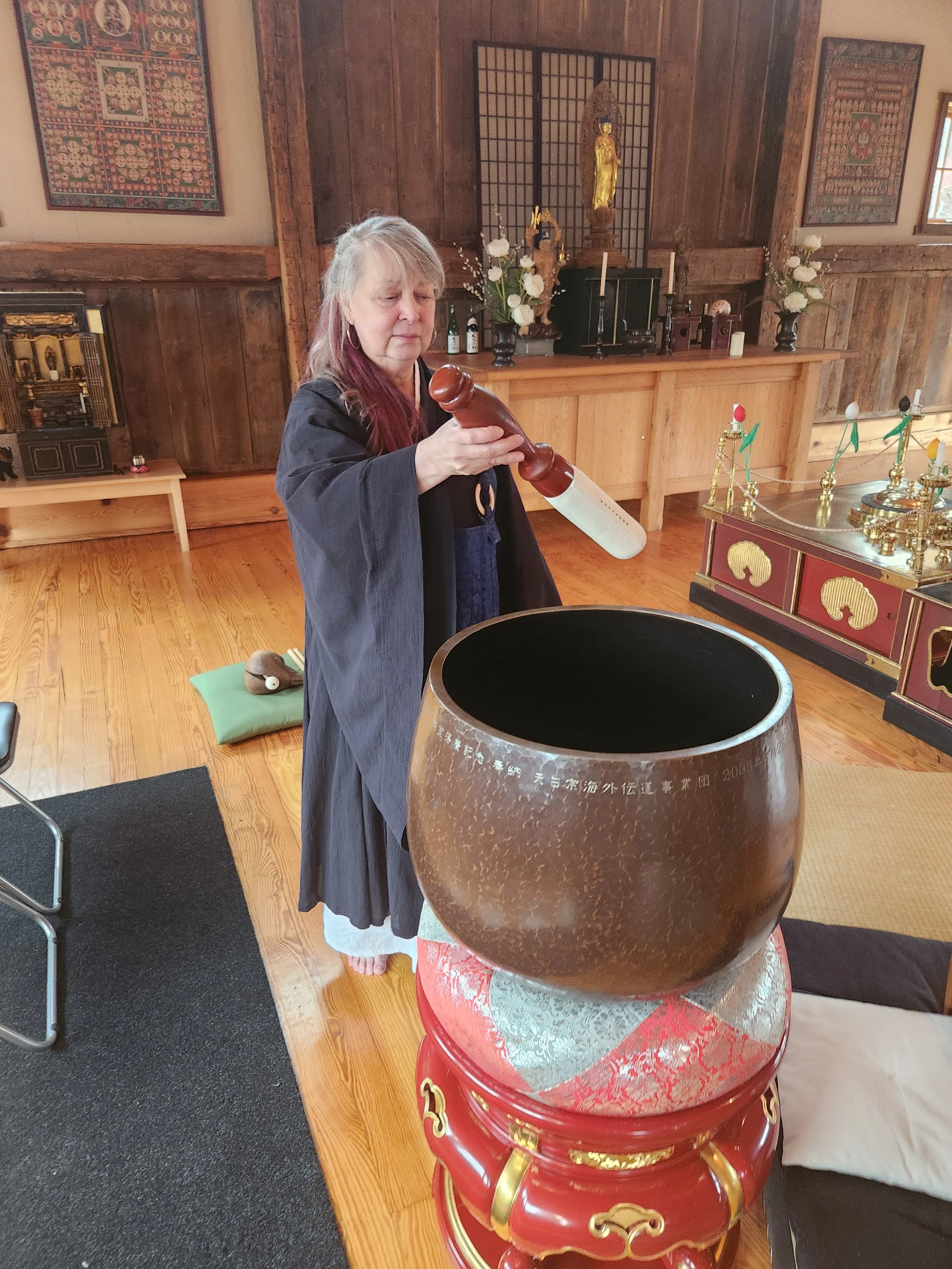
Emyo during a Jukai ceremony
Much of our living ritual tradition reaches back to Hakuin in the seventeenth century. Jun Po Roshi adapted and updated many of these forms for a twenty-first century, English-speaking audience. Our responsibility is neither simply to preserve these forms unchanged nor to discard them in favor of something entirely new. We learn them, understand them, practice them, and discover how they can continue to serve contemporary practitioners.
Ongoing ritual practice engages both individuals and the collective in powerful forms of practice. Our priests are vital in leading others through these forms. To do that well requires more than knowing what to say or when to bow. It requires familiarity, confidence, embodiment, and an appreciation for why these forms matter.
A Commitment to Becoming
Learning to become a Zen priest is a powerful commitment. Adult learners continually grow in their understanding, their competency with ritual forms, and their ability to sit compassionately with the suffering of others. For me, clergy training is not about producing people who can perform ceremonies or carry the title “Zen priest.” It is about helping mature practitioners develop the capacity to serve a sangha.
A Cosmopolitan Zen priest must continue to practice, continue to learn, and continue to develop the ability to meet people where they are. Meditation, pastoral presence, and ritual practice are not separate skills. Together, they form the foundation for a life of service.
It is always an honor to help sangha members find their way into the leadership roles that Zen priesthood offers. Ordination is not the end of the journey. It is an invitation to deepen one's practice, broaden one's capacity to serve, and discover how one's own awakening can become an offering to others.